About Heliotropium amplexicaule Vahl
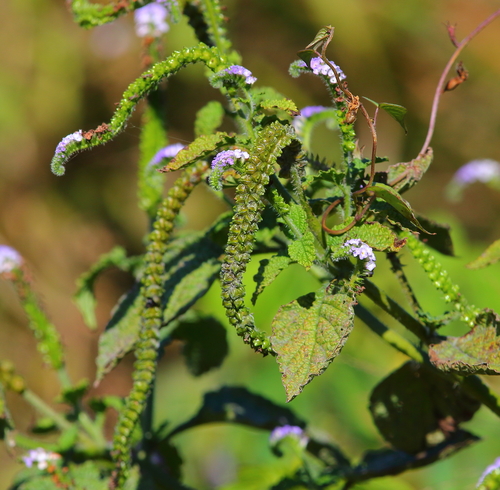
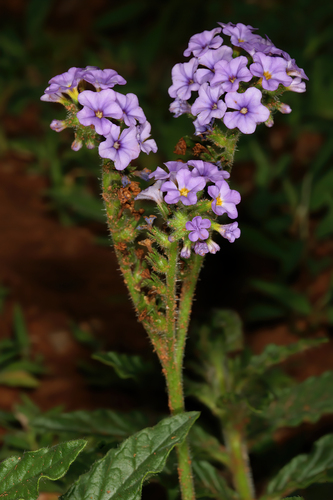
Heliotropium amplexicaule is a species of heliotrope that goes by multiple common names: clasping heliotrope, blue heliotrope, and summer heliotrope. It is native to South America, particularly Argentina, but has been introduced to several other continents. In some regions, such as eastern Australia, it is classified as a noxious weed. This species was first formally described in 1794 by Martin Vahl. It is a clumpy perennial herb that produces branching, hairy stems that reach a maximum height of around 0.5 meters (1 foot 8 inches). It grows abundant foliage made up of oblong, wavy-edged green leaves that measure 4 to 9 centimeters long. Curving terminal spike inflorescences hold multiple tiny bright purple flowers, which have rounded lobes and tubular yellow throats. The fruits it produces are paired nutlets with rough surfaces. In New South Wales and surrounding areas of Australia, research is ongoing into biological pest control methods to slow the spread of this plant. Two candidates have shown promising results: the blue heliotrope leaf beetle (Deuterocampta quadrijuga), and the blue heliotrope flea beetle, a flea beetle belonging to the genus Longitarsus. Heliotropium amplexicaule contains pyrrolizidine alkaloids and is poisonous. It outcompetes desirable plants in pastures and causes toxicity in livestock.