About Heliconia rostrata Ruiz & Pav.
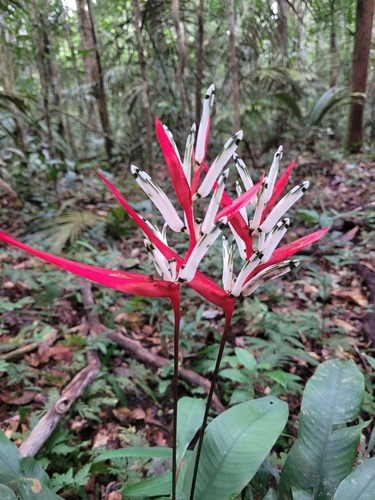
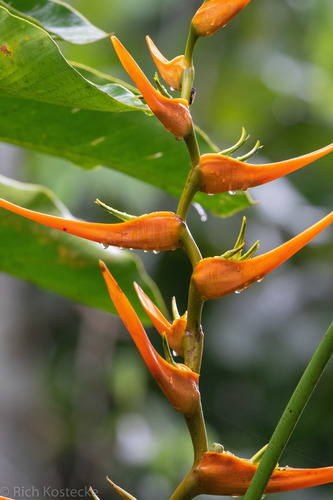
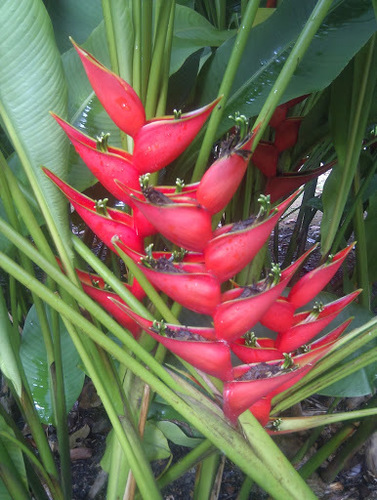
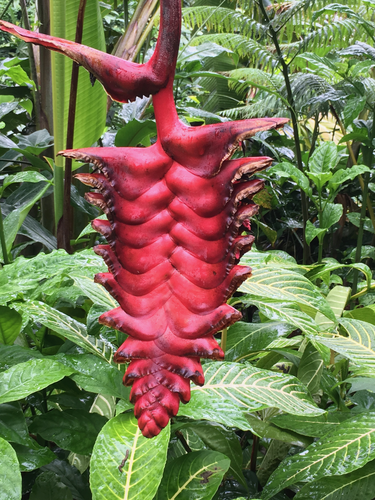
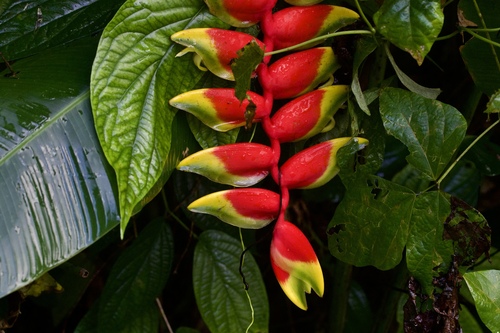
Heliconia rostrata, commonly called hanging lobster claw or false bird of paradise, is a herbaceous perennial plant. It is native to El Salvador, Peru, Bolivia, Colombia, Venezuela, Costa Rica, and Ecuador, and has become naturalized in Puerto Rico. This species grows in tropical rainforests, since it grows best in warm, humid conditions. Many other Heliconia species, such as Heliconia bihai, produce upright, upward-facing inflorescences, with cup-shaped bracts that hold water for birds and insects. In contrast, Heliconia rostrata produces pendulous (hanging) inflorescences, with bracts facing downward and flowers growing nestled underneath the bracts. Because the bracts do not collect rainwater, the flowers inside offer a source of undiluted nectar. People who grow Heliconias recognize that they act as host flowers that attract many birds, particularly hummingbirds. Thanks to its distinctive features, H. rostrata is often used as a specimen plant in tropical gardens, and is commonly grown in landscaped areas throughout humid tropical regions. Known locally as patujú, Heliconia rostrata is the national flower of Bolivia, shared with the cantuta flower.