About Heliconia caribaea Lam.
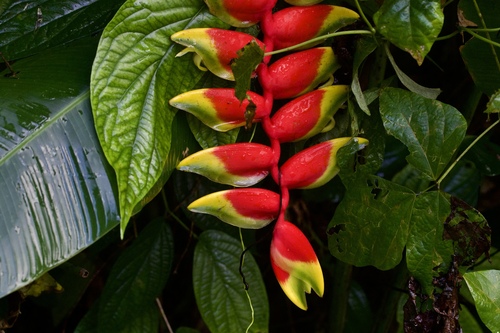
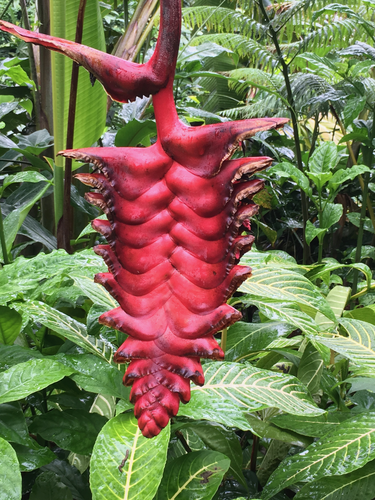
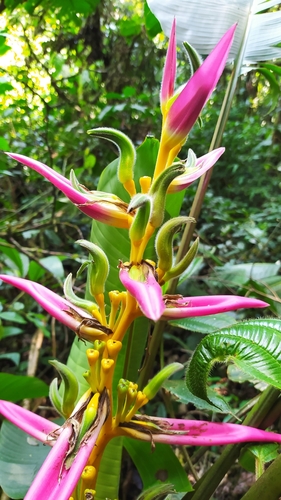
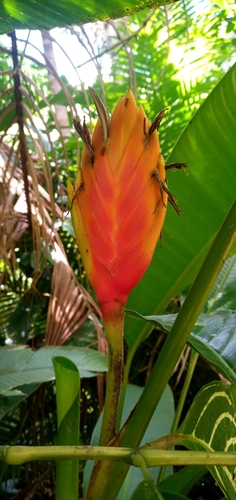
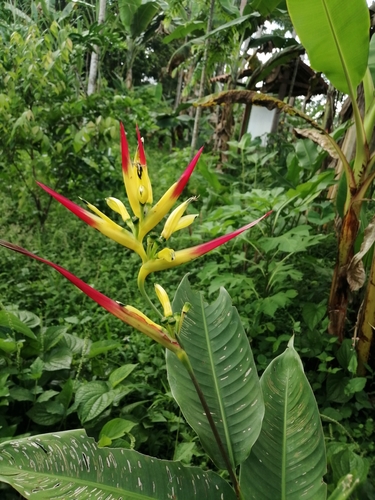
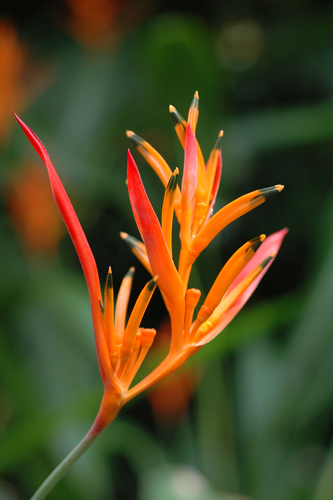
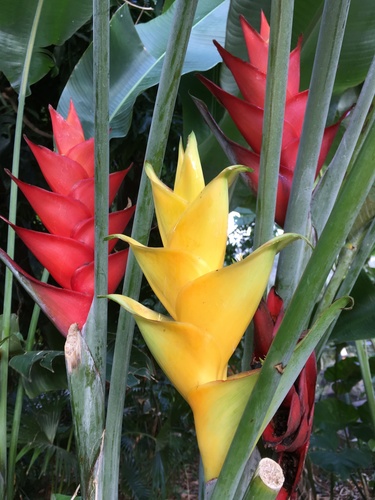
Heliconia are herbaceous plants that range from 0.5 to nearly 4.5 m (1.5–15 ft) tall, with height varying between species. There are 194 known recognized species of Heliconia. Most of these species are native to tropical Americas, while a small number are indigenous to specific islands of the western Pacific and Maluku. Many Heliconia species occur in the tropical forests of these native regions. Several species are widely cultivated as ornamental plants, and a few have become naturalized in Florida, Gambia, and Thailand. Many bat species use Heliconia leaves for shelter. The Honduran white bat, Ectophylla alba, uses five different Heliconia species to build diurnal tent-shaped roosts. The bat cuts the leaf’s side veins that extend from the midrib, which causes the leaf to fold into a tent shape. This folded structure shelters the bats from rain, sun, and predators. Additionally, the stems of Heliconia leaves are not strong enough to support the weight of typical bat predators, so any shaking of the leaf alerts roosting bats when predators are present. The bat species Artibeus anderseni and A. phaeotis also form leaf tents from Heliconia in the same way as the Honduran white bat. The neotropical disk-winged bat, Thyroptera tricolor, has suction disks on its wrists that let it cling to the smooth surfaces of Heliconia leaves. This bat roosts head-up inside the rolled young leaves of Heliconia plants. Heliconias are an important food source for forest hummingbirds, particularly hermits (Phathornithinae). Some hermit species, such as the rufous-breasted hermit (Glaucis hirsuta), also use Heliconia plants for nesting. While Heliconia are almost exclusively pollinated by hummingbirds, some bat pollination has been documented. In the Solomon Islands, Heliconia solomonensis is pollinated by the macroglossine bat Melonycteris woodfordi. Heliconia solomonensis has green inflorescences and flowers that open at night, traits that are typical of bat-pollinated plants. This bat is the only known nocturnal pollinator of Heliconia solomonensis. Several cultivars and hybrids of Heliconia have been selected for garden planting. These include the hybrid between South American (mainly Brazilian) species H. psittacorum × H. spathocircinata, H. × rauliniana (a hybrid of Venezuelan H. marginata and Brazilian H. bihai), and H. chartacea cv. 'Sexy Pink'. The most commonly grown landscape Heliconia species include H. augusta, H. bihai, H. brasiliensis, H. caribaea, H. latispatha, H. pendula, H. psittacorum, H. rostrata, H. schiediana, and H. wagneriana. Heliconias are grown for the florist trade and as landscape plants. These plants do not grow well in cold, dry conditions. They are very intolerant of drought, but can tolerate some soil flooding. To grow well, Heliconias require abundant water, sunlight, and humus-rich soils. They are grown as ornamental plants in tropical regions across the world. The flower of H. psittacorum, the parrot heliconia, is especially distinctive: its greenish-yellow flowers have black spots and red bracts, which resemble the bright plumage of parrots.