About Heleophryne rosei Hewitt, 1925
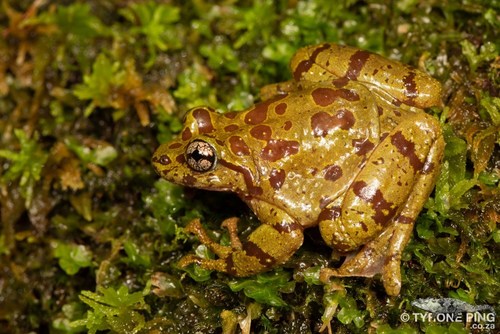
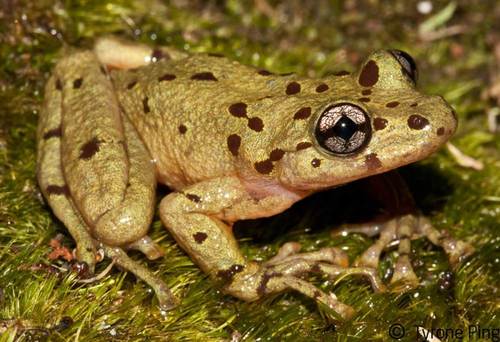
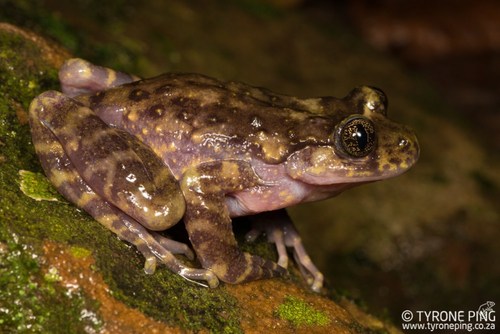
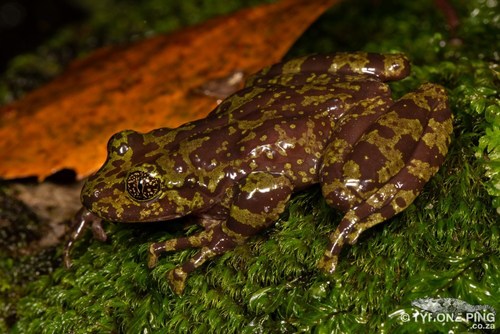
Heleophryne rosei Hewitt, 1925 is a moderately sized frog. Females grow larger than males, reaching up to 60 mm (2.4 in) in length, while males reach up to 50 mm (2.0 in). Adult individuals have striking colouration, most often featuring a pale green base colour covered with purple to brown blotches. Their fingers and toes have large, triangular terminal discs. A rudimentary thumb is present in the form of a distinct inner metacarpal tubercle. Their feet are half webbed, and one phalanx of the fifth toe remains free of webbing. Tadpoles of this species lack both upper and lower jaw sheaths, but have up to 17 rows of posterior labial teeth. They also have a large oral disc, and are able to climb up wet vertical rock faces. This species is found only on the southern, eastern, and marginally western slopes of Table Mountain in Cape Town. Its typical habitat includes moist, forested gorges with vertical rock faces, as well as more exposed streams surrounded by dense marginal vegetation; the latter type of habitat is usually found at higher altitudes. Tadpoles need a year-round supply of water, while adults can move away from streams and even be found in caves. Breeding begins in November, when streams are low and temperatures are high. Male secondary sexual characteristics include a number of small black spines on the outer surfaces of the forearms, the back, and the upper surface of the back legs. Eggs of this species have not been discovered, but closely related species deposit their eggs under rocks in streams. Tadpoles take approximately 12 months to fully develop.