About Hedydipna collaris (Vieillot, 1819)
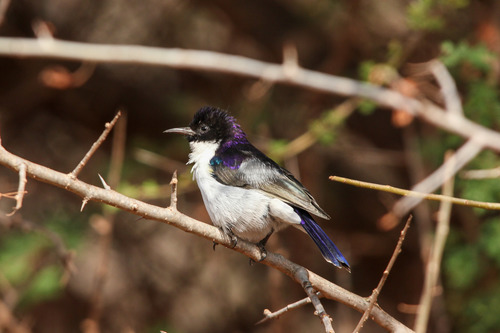
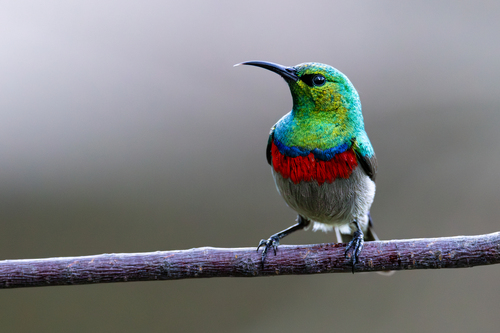
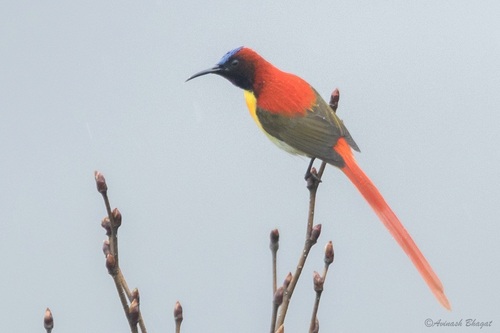
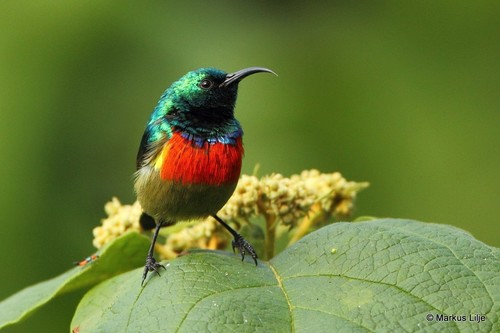
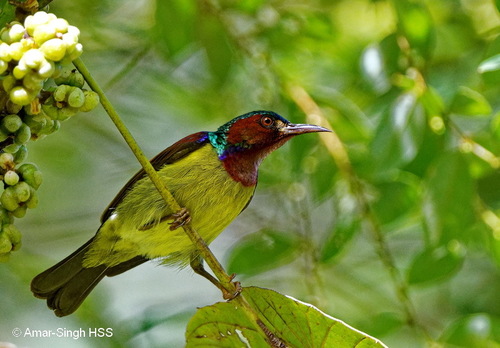
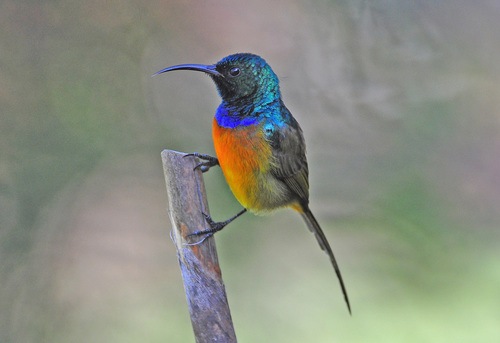
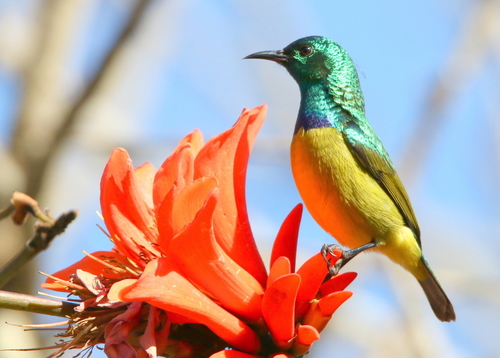
The collared sunbird, scientifically named Hedydipna collaris (Vieillot, 1819), is a bird species belonging to the family Nectariniidae. Sunbirds are a group of very small Old World passerine birds that feed mostly on nectar, but will also eat insects, particularly when feeding their young. The collared sunbird is actually mainly insectivorous. Sunbirds have fast, direct flight enabled by their short wings. Most sunbird species can collect nectar by hovering like hummingbirds, but usually perch to feed most of the time. The collared sunbird is a common breeding bird across most of sub-Saharan Africa, and it is a seasonal migrant that moves within its range. Females lay two or three eggs in a suspended nest built in a tree. Collared sunbirds are tiny, measuring only 9–10 cm (3.5–3.9 in) in length. They have short, thin, down-curved bills and brush-tipped tubular tongues, both traits that are adaptations for feeding on nectar. Adult males have glossy green upperparts and head, a yellow belly, and a narrow purple breast band. Females are duller green on the upperparts and entirely yellow on the underparts. This species lives in forests located near water.