About Hedeoma pulegioides (L.) Pers.
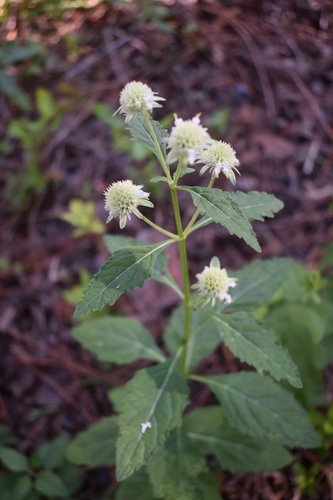
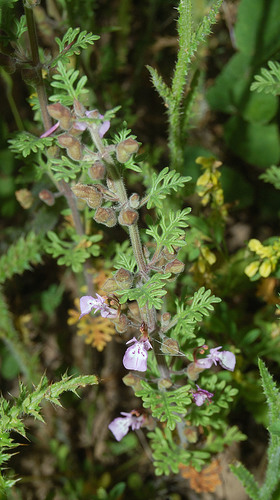
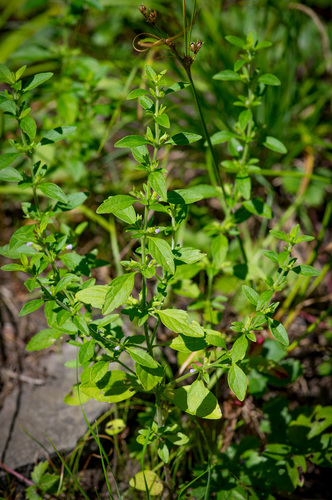
Hedeoma pulegioides (L.) Pers., commonly called pennyrile, American pennyroyal, or American false pennyroyal, is a species of the genus Hedeoma native to eastern North America. Its natural range extends from Nova Scotia and southern Ontario west to Minnesota and South Dakota, and south to northern Georgia and Arkansas. It is a low-growing, strongly aromatic herbaceous annual that reaches 15 to 30 cm in height. It has a slender, erect, much-branched, somewhat hairy, square stem. Its leaves are small, thin, and rather narrow, with a strong mint-like odor and a pungent taste. The pale blue, monoecious flowers are produced in small clusters, and flowering occurs from mid to late summer. Additional common names include mock pennyroyal, squaw mint, tickweed, stinking balm, and mosquito plant. The dialectal pronunciation-derived name "pennyroyal" (or pennyrile) also gives its name to the Pennyroyal Plateau, a geographic province of western Kentucky, where this species once grew in large enough profusion to name the entire region. In the early 20th century, Hedeoma pulegioides was used in domestic medicine as a warm infusion to promote perspiration and as an emmenagogue. When ingested, one of its components, pulegone, metabolizes into hepatotoxic metabolites that can cause organ failure, seizures, and death depending on dosage. In the 19th century, it was recommended for flea control: Sprigs of wild myrtle, or penny-royal, or small flat camphor-bags dispersed about your under-clothes, and conveniently fastened, will keep fleas from molesting your person during the day. At night, let penny-royal be scattered over the bed-covers, and laid under the pillows and bolster; strewing a large quantity between the sacking and the matrass. Wash yourself before going to bed in water that has had essence of pennyroyal mixed with it. In contemporary usage, it is frequently recommended as a low-growing ground cover with insect repellent properties, especially effective against ticks, fleas, and mosquitoes.