About Harpocera thoracica (Fallen, 1807)
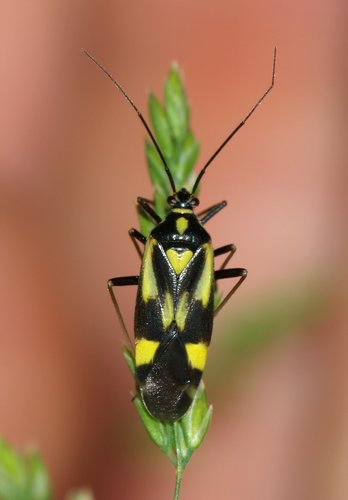
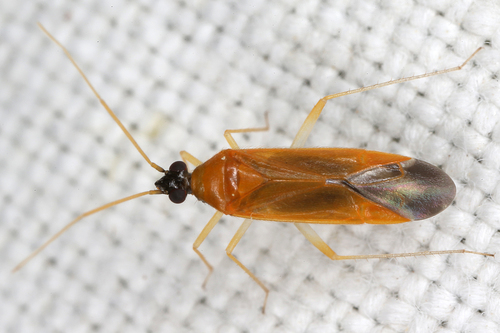
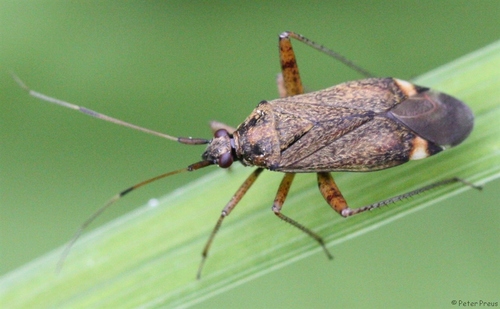
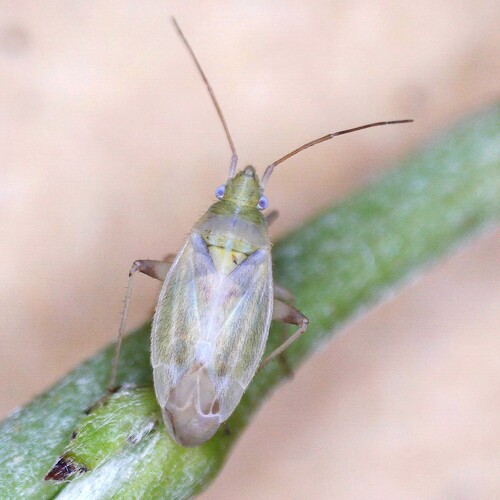
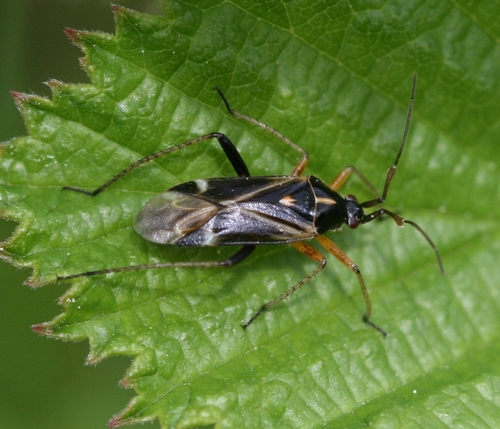
Description: Male Harpocera thoracica reach a length of about 6–6.4 millimetres (0.24–0.25 in), while females reach 6.4–6.8 millimetres (0.25–0.27 in). Clear sexual dimorphism occurs between males and females of this species. Males have a more elongated body, longer tibiae, and a characteristic inflated second antennal segment. The basic body color of these bugs ranges from black, dark brown or orange to pale brown. The tips of the hemelytra are black, surrounded by white markings. Legs are yellowish-brown, and antennae are brown. Nymphs have dark hairs and thickened basal antennal segments, and are colored reddish or pinkish-white.
Distribution: This fairly common species occurs across most of Europe, excluding the Baltic states, Canary Islands, Finland, Iceland, Malta, and Russia.
Habitat: These bugs live in hedgerows and sunny, dry areas that support oak trees.
Ecology: Adults are active from late April or May to mid-June at the latest, and only live for one month, with females having a slightly longer lifespan. These zoophytophagous bugs suck on buds, feed on pollen and sap from English oaks (Quercus robur), feed on nectar from cow parsley (Anthriscus sylvestris), and occasionally hunt small insects, especially aphids. After eggs are laid, they remain dormant for 10 months before hatching into larvae. Larval development takes no more than two weeks, after which nymphs emerge. Males are attracted to ultraviolet light, and may be collected in moth traps.