About Harpaphe haydeniana (Wood, 1864)
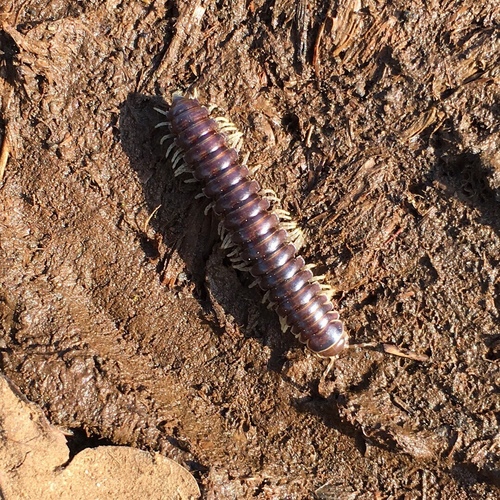
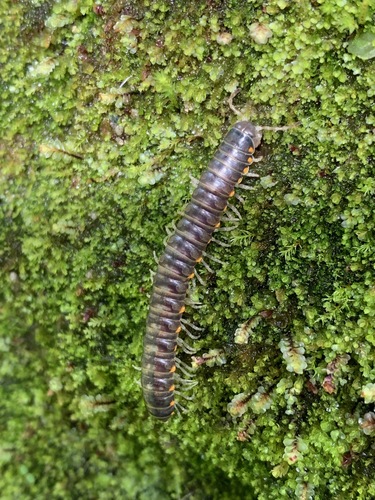
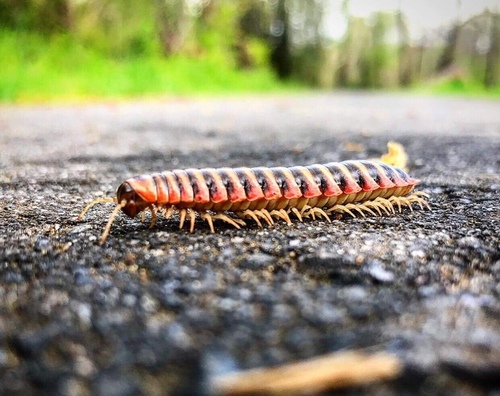
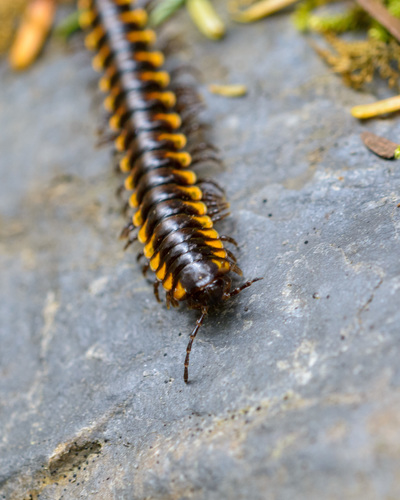
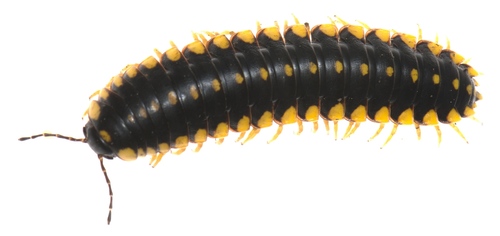
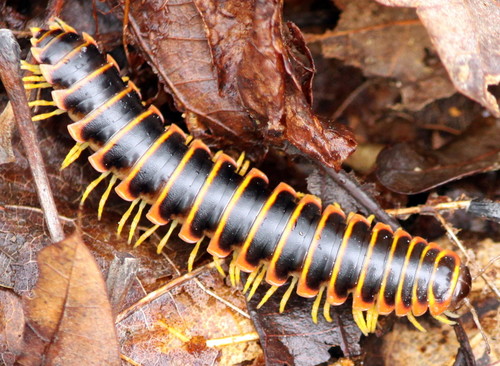
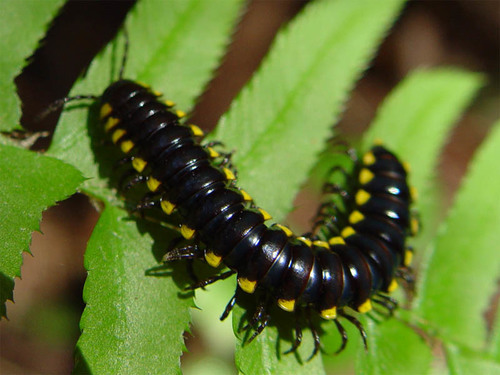
Mature Harpaphe haydeniana grow to 4–5 centimeters (1.6–2 inches) in length. The upper surface of their bodies ranges from black to olive green, with distinctive yellowish patches running along their sides. This millipede has roughly 20 body segments, with a total of 30 pairs of legs for males and 31 pairs of legs for females. The difference in leg count comes from one pair of legs on the seventh segment of males being modified into gonopods, structures used for sperm transfer. Individual H. haydeniana can live 2–3 years. Harpaphe haydeniana is distributed from southeast Alaska south to Monterey County, California, and extends east as far as the Sierra Nevada mountains. H. haydeniana is an important component of forest ecosystems, as it breaks down leaf litter and releases nutrients locked in the litter for use by other organisms. It is commonly found in redwood forests, where large numbers of individuals can occur in a small area. Immature H. haydenidae millipedes feed on humus. The millipede has few natural predators, thanks to its aposematic (warning) coloration and its ability to secrete hydrogen cyanide when threatened. This trait is the origin of its common names "cyanide millipede" and "almond-scented millipede", because cyanide has an almond-like odor, though the ability to secrete cyanide is not unique to this species. Even so, one specialized predator of H. haydeniana is known: the ground beetle Promecognathus laevissimus.