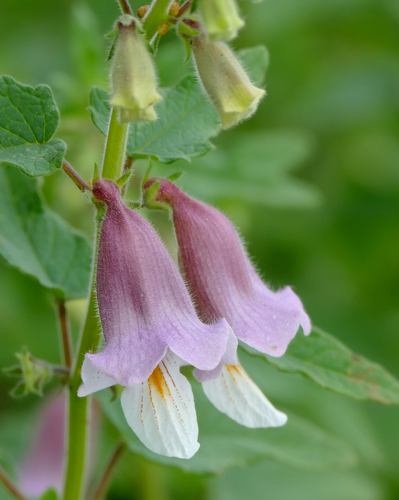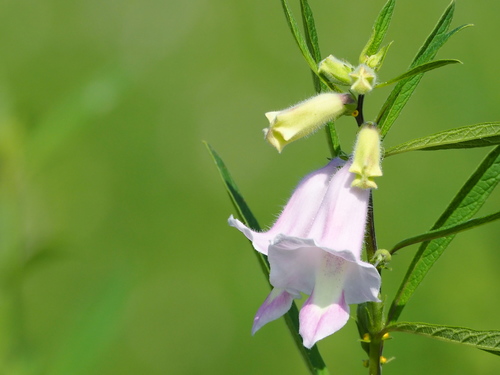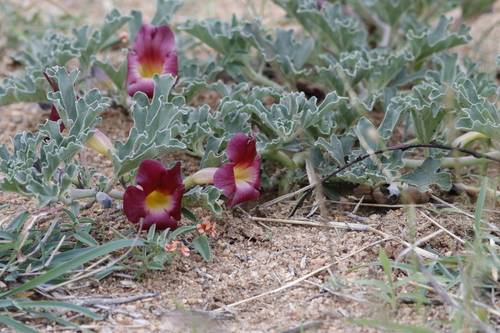
About Harpagophytum zeyheri Decne.
The species covered here, Harpagophytum zeyheri Decne., belongs to the genus Harpagophytum, a group of plants in the sesame family native to southern Africa. Members of this genus are commonly called devil's claw, with other common names including grapple plant and wood spider. The genus gets its common name "devil's claw" from the unusual hooked appearance of its fruit. Note that this common name is also used for several North American species in the genus Proboscidea and some species of Pisonia. The tuberous roots of devil's claw are used in folk medicine to reduce pain.
Within the genus, Harpagophytum procumbens occurs mainly in eastern and southeastern Namibia, southern Botswana, and the Kalahari region of the Northern Cape, South Africa. H. zeyheri is found in northern Namibia (Ovamboland) and southern Angola.
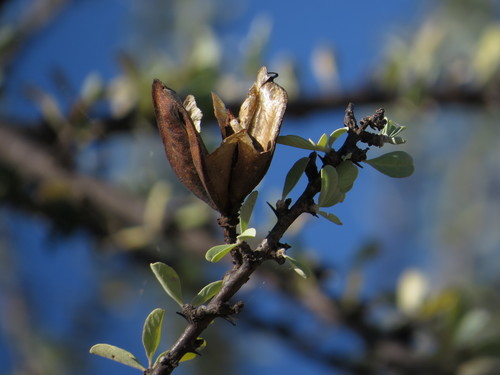
Harpagophytum procumbens grows in deep, sandy soils in areas with low annual rainfall between 150 and 300 mm per year. It is a perennial tuberous plant that produces new creeping stems each year. Above-ground stems sprout after the first rains and die back during droughts or after frosts. Stems grow from a persistent primary tuber, and multiple secondary tubers, the parts harvested from the plant, grow from the primary tuber at the end of fleshy roots. The plant gets both its scientific and common names from the hooked spines on its woody capsules. Mature fruit opens slowly, so only 20 to 25% of a plant's seeds may come into contact with soil in any given year. H. procumbens seeds have a high level of dormancy, a low respiration rate, and can remain viable in the soil seed bank for more than 20 years.
The sustainability of the commercial devil's claw trade has been questioned for many years. The governments of the three range states where devil's claw grows—Namibia, Botswana, and South Africa—have created policies and regulations to protect the species, set rules for sustainable harvest, and support ongoing livelihoods for harvesters. Proposals have been made at different times to list the species for protection under the Convention of International Trade in Endangered Species (CITES), but after range states implemented sustainable trade management measures, these CITES protection proposals were withdrawn.
Many studies have examined the biological and ecological needs of harvested and unharvested devil's claw populations. Early short-term studies in Botswana looked at the species' ecological requirements, while more recent studies have inventoried devil's claw populations and tested sustainable harvesting methods. Understanding a harvested species' ecological needs is required to manage harvest to ensure it remains sustainable. Stewart and Cole (2005) analyzed the complex economic, social, and cultural factors that shape devil's claw harvest. Stewart (2009) compared population structure, density, growth, mortality, and seed and fruit production between harvested and unharvested populations in South Africa's Kalahari savannas. Plant density and population structure differed noticeably between overgrazed areas and grass-dominated areas, which suggests the differences may come from competition for scarce water and nutrients. Experimental harvest (removal of secondary tubers) was not linked to a significant increase in mortality for any harvested size class of plants. Harvest also did not impact overall growth, though medium-sized plants grew more during the study in both harvested and unharvested populations. Fruit production was highly variable, and mature fruits only formed under favorable conditions. Under the conditions of this experimental harvest, the species appeared resilient to harvest: harvested plants survived at the same rate as unharvested plants. However, because the plant's habitat is spatially variable and the plants themselves show growth plasticity, more harvest data collected from a large number of plants in actual harvested areas is needed to fully understand the species' life history.
Ethnobotanical use of devil's claw originates from southern Africa. H. procumbens is one of the floral emblems of Botswana, where it is considered useful for treating a range of pain conditions. Preparations made from the plant or its extracts, such as harpagoside, are used in folk medicine and phytotherapy as an anti-inflammatory herbal drug or dietary supplement. There is currently no accepted clinical evidence of the plant's efficacy and bioavailability, though limited beneficial effects have been observed for treating lower back pain and osteoarthritis. A 2016 Cochrane review of clinical research found that devil's claw appears to reduce low back pain more than placebo, though the available evidence was only of moderate quality at best. As of 2022, further research into the plant's effects on pain and inflammation is considered worth pursuing.