About Hapalemur aureus Meier, Albignac, Peyriéras, Rumpler & Wright, 1987
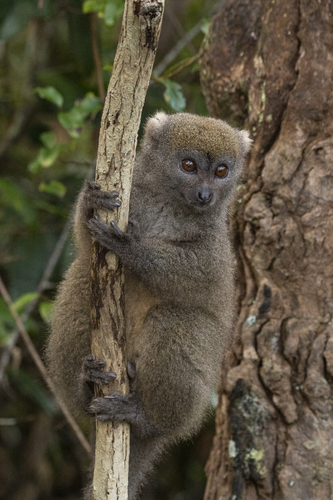
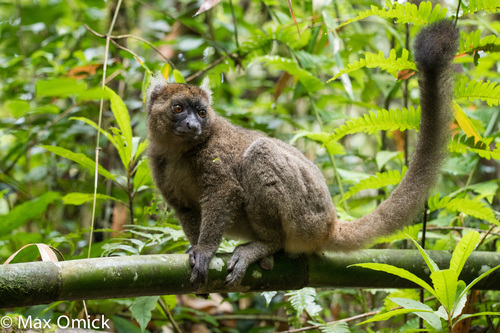
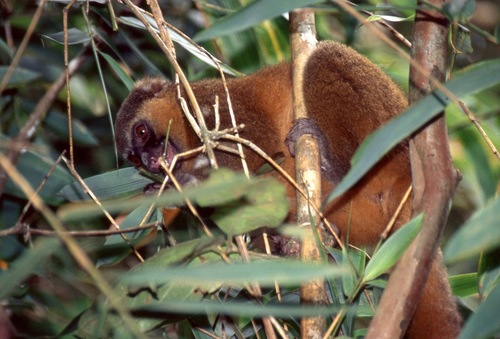
The golden bamboo lemur (Hapalemur aureus) is crepuscular, meaning it is most active at dawn and dusk. It is roughly the size of a domestic cat, with a body length of 28–45 cm (11–18 in) and an additional tail length of 24–40 cm (9.4–15.7 in). Adults weigh an average of 1.6 kg (3.5 lb). This species is endemic to the rainforests of south-eastern Madagascar, where it occurs at elevations between 600 and 1,400 m (2,000 and 4,600 ft). It is found in areas near Ranomafana National Park, where it was first discovered in 1986 by Patricia Wright, and near Andringitra National Park, where it was discovered in 1993. It may also occur in the forest corridor that connects Ranomafana and Andringitra National Parks. As its common name suggests, the golden bamboo lemur feeds almost exclusively on grasses, especially giant bamboo, also called volohosy (Cathariostachys madagascariensis). It feeds on this bamboo's new shoots, leaf bases, and creepers. The growing shoots of this bamboo contain 0.015% cyanide (1 part cyanide per 6667 parts plant matter). Each adult golden bamboo lemur eats around 500 g (18 oz) of bamboo per day, which contains about twelve times the lethal dose of cyanide for most other animals of this size. It is not currently known how the golden bamboo lemur avoids cyanide poisoning. Golden bamboo lemurs live in small groups of two to six individuals, with a home range of up to 80 hectares (0.31 mi²), but they usually travel less than 400 m (1,300 ft) within a single day. Females have a gestation period of approximately 138 days, and give birth to one infant (occasionally two) at the start of the rainy season, in November or December. Young golden bamboo lemurs are highly dependent on their mothers, and are kept hidden in dense vegetation for their first two weeks of life.