About Handroanthus heptaphyllus (Vell.) Mattos
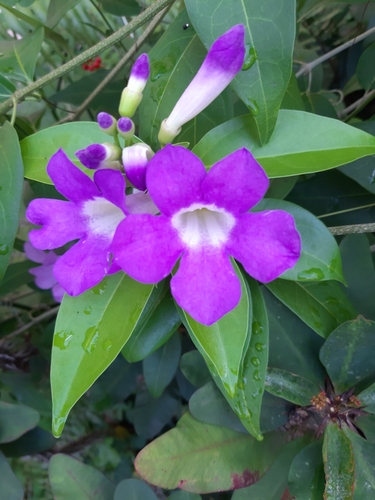
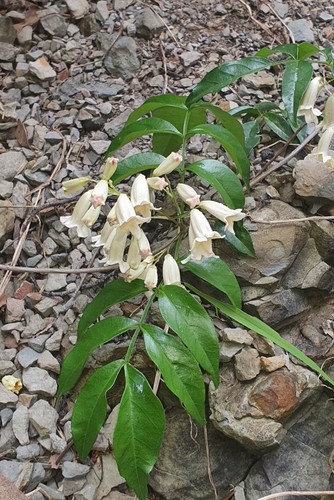
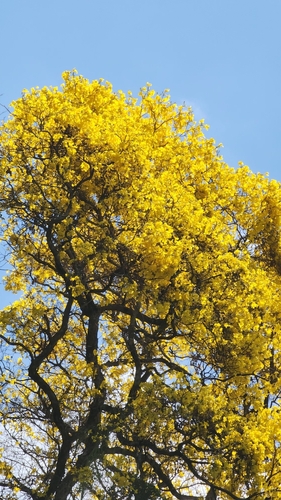
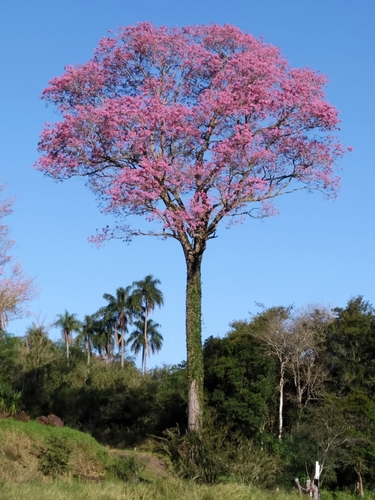
Handroanthus heptaphyllus (Vell.) Mattos has conflicting reported maximum height: some sources note it can reach up to 40 m, while Brazilian botanist Lúcia Lohmann describes it as a short to medium height tree with a maximum height of 15 m. The bark is brown-gray, very rough, with deep cracks in adult trees. This species has opposite palmate compound leaves; each compound leaf holds 5 to 7 elliptical leaflets 10-15 cm long with serrated edges. It is semi-deciduous, and produces purple or pink tubular flowers that develop before new leaves emerge. Flower color can range from bright pink to pale pink, and occasionally white. Flowering begins in the first half of September; the first leaves appear approximately 30 days after flowering starts. Its fruit is a long pod reaching 30–40 cm in length and 1–1.5 cm in width. Ripe pods are brown, and eventually open longitudinally to release up to 150 winged seeds. Ripe fruit is present between January and February. H. heptaphyllus requires specific light and humidity conditions, is susceptible to frost when young, withstands high winds, and has a strong, deep root system. It is considered decorative, and is frequently planted in parks, squares, and public woodland. It is often confused with Handroanthus impetiginosus, which shares similar characteristics, differing only in tree height and leaf size.