About Hamptophryne boliviana (Parker, 1927)
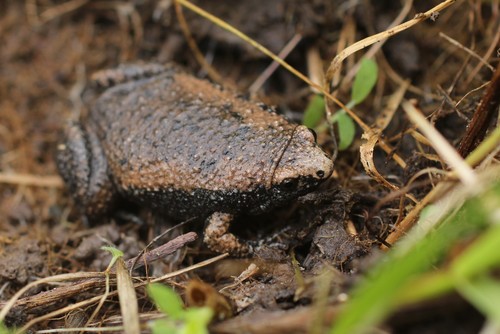
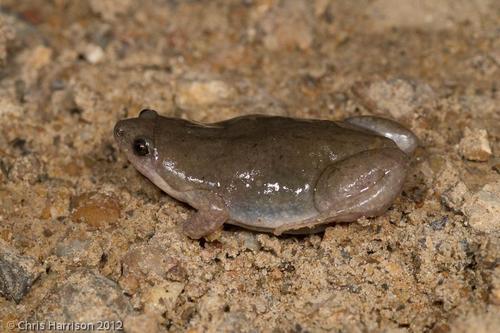
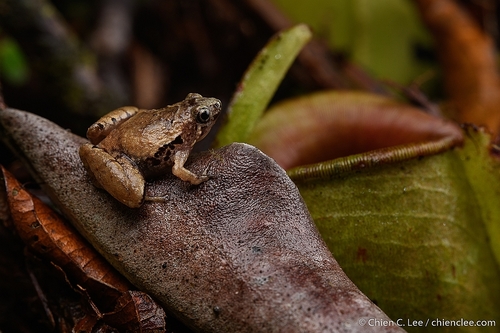
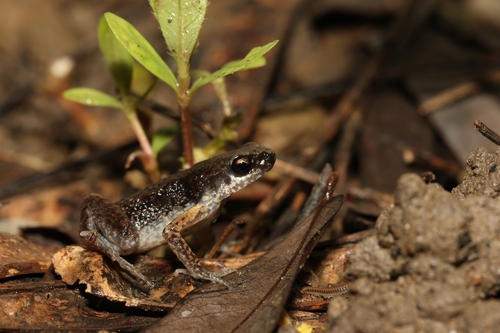
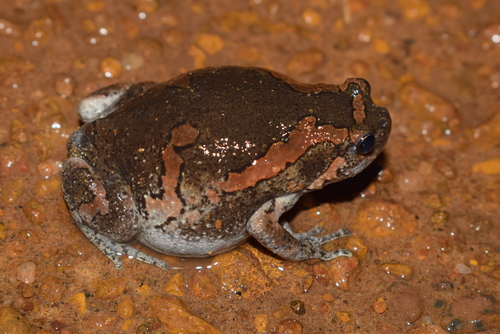
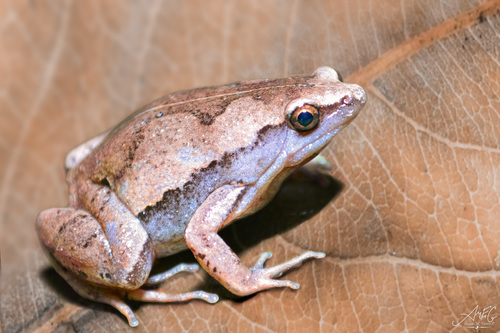
Adult male Hamptophryne boliviana from Peru measure 34–39 mm (1.3–1.5 in) in snout–vent length, while adult females measure 39–44 mm (1.5–1.7 in); some populations may have smaller body sizes. The species has a moderately robust body. Its fingers and toes have distinct terminal discs, and lack lateral fringes and webbing. The dorsum is tan, marked with a large brown mid-dorsal blotch, and usually has a faint creamy white mid-dorsal stripe. The flanks, sides of the head, and concealed surfaces of the limbs are dark brown. Males have a dark brown throat. The belly and ventral surfaces of the hind limbs are creamy white with brown spots or reticulations. The iris is pale bronze, with fine black reticulations. This frog species occurs in the leaf litter of primary and secondary tropical rainforests, at elevations up to 400 m (1,300 ft) above sea level. They are nocturnal, and feed on ants on the ground, as well as on tree trunks and branches. Breeding occurs in ponds and flooded forest areas after heavy rains. This species is widespread, but uncommon across most of its range. No significant threats to this species have been identified.