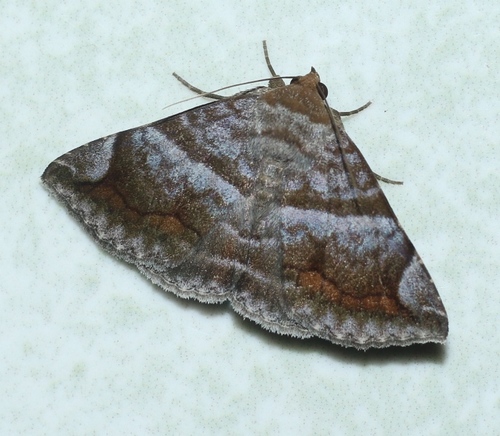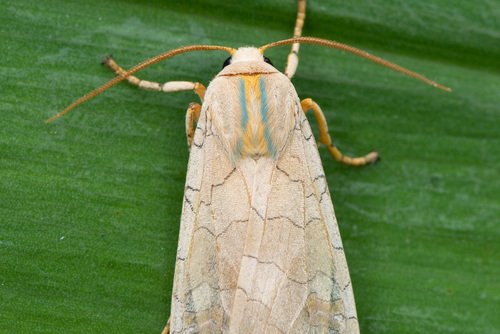
About Halysidota tessellaris J.E.Smith, 1797
Halysidota tessellaris, commonly known as the pale tiger moth, banded tussock moth, and tessellated halisidota, is a moth species belonging to the family Erebidae and the tribe Arctiini (the tiger moths). This species was first formally described by James Edward Smith in 1797. Like many related moth species, adult Halysidota tessellaris have chemical defenses that they obtain from their host plants; in this species, these defenses are alkaloids. Observations of larval behavior suggest that the larvae are also chemically protected, but their alkaloid content has not been analyzed to date. This moth is distributed across North America, ranging from southern Canada southward through Texas and central Florida. In the northern part of its range, this species produces one generation per year, while in the southern part it produces two or more generations per year. Known food plants for the larvae of this species include multiple species of alder, ash, birch, blueberry, chestnut, elm, grape, hackberry, hazel, oak, walnut, willow, and many other types of plants. As a late-season feeder, this moth has not been reported to cause serious injury to trees.