About Halpe homolea hindu Evans, 1937
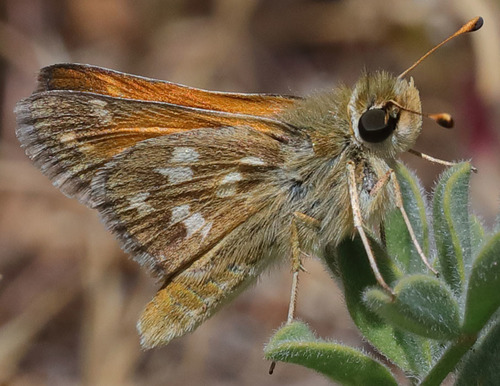
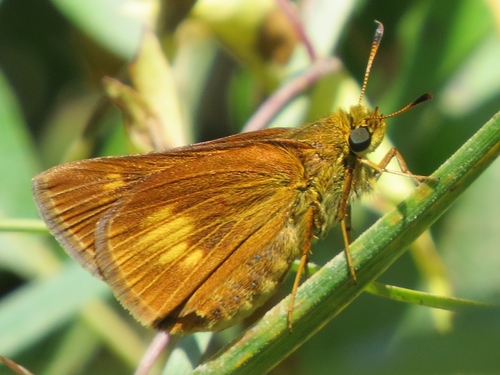
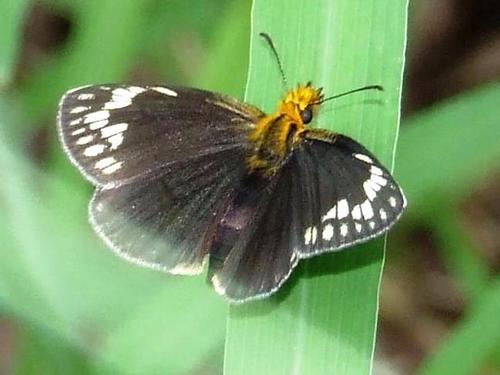
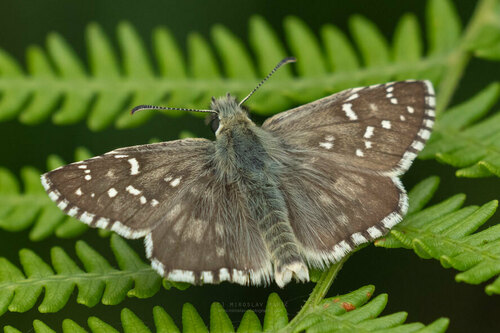
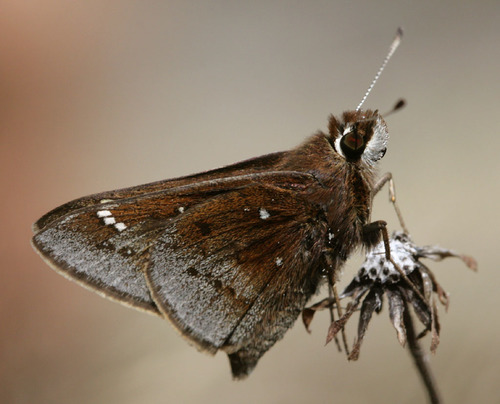
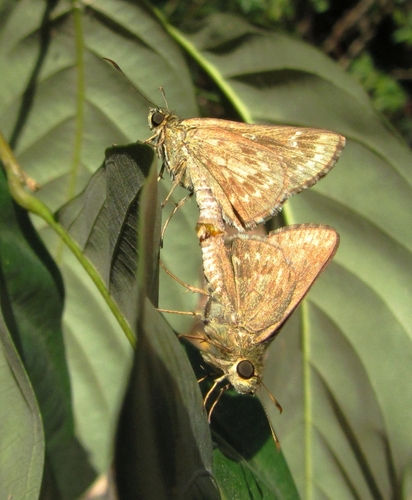
This is a description of male Halpe homolea hindu Evans, 1937. The upperside is blackish-brown. The forewing has five or six semi-hyaline spots; one spot is often absent. One spot sits inside the upper end of the cell, and two spots are arranged obliquely in the disc near the bases of the median interspaces. These two spots can be quadrate, oblong, or small and round. There are also two small sub-apical spots, and sometimes a third minute spot close to the costa. In some specimens classified as perara, all spots are absent except the two small, round discal spots. The genitalia of all these variants are reported to be identical, confirming that this is a single variable species. The hindwing has no markings. Cilia are chequered brown and ochreous-grey on the forewing, and whitish on the hindwing, with small brown marks at the vein ends. The underside is slightly paler than the upperside and tinted with ochre. The forewing has a dull ochreous-white streak below the basal half of the costa. The spots match the pattern seen on the upperside, but all are tinted with ochre. There is also a series of sub-marginal spots that are more densely ochre-tinted, one in each interspace, which fade and become obsolete towards the hind margin. The basal half of the hindwing is covered in a dull greyish-ochreous smudge, created by tiny scales of this colour. An outwardly curved discal series of more or less obscure ochreous-white spots runs from the costa to above the sub-median vein. Cilia of both wings are whitish, with brown spots positioned opposite the vein ends. All markings are highly variable. In some specimens, the basal greyish-ochreous suffusion is very dull and indistinct; in others it is entirely absent. In some examples, almost all spots on both wings are absent. Antennae are black; the shaft is spotted with ochreous-white on the underside, and the club has an orange tip. Palpi, head and body are blackish-brown. The underside of the palpi is grey, and the pectus and abdomen are whitish. Legs are dull pale red. Females are similar to males, usually somewhat paler in overall colour, with slightly larger spots on the forewing.