About Halophila ovalis (R.Br.) Hook.f.
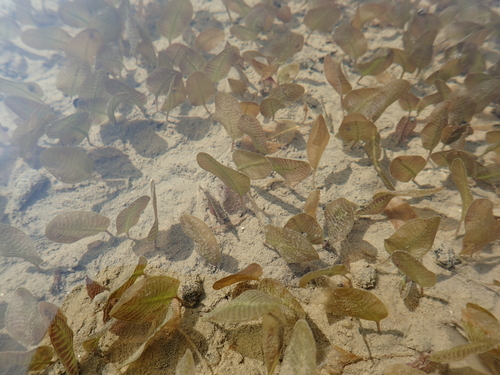
Halophila ovalis, commonly known as paddle weed, spoon grass, or dugong grass, is a small herbaceous seagrass belonging to the family Hydrocharitaceae. This species naturally grows on seabeds and in other saltwater environments across the Indo-Pacific, and isolated introduced populations have become established in Florida, Cuba, and Antigua. Robert Brown first described this species under the name Caulinia ovalis; Joseph Dalton Hooker later transferred it to the genus Halophila in his 1858 publication Flora Tasmaniae. The name Halophila ovata is currently considered a synonym of Halophila ovalis. Halophila ovalis grows near reefs, estuaries, and islands, in inter-tidal zones, on soft sand or mud substrates. Its ovate leaves grow on stems that emerge from a rhizome located underneath the sand. The roots can reach up to 800 mm in length and are covered in fine root hairs. This species often forms dense meadows that dominate patches of seabed or sand banks. The plant’s above- and below-ground structure stabilizes the seabed and provides habitat for other marine species. Since dugongs feed on Halophila ovalis, it is commonly called dugong grass.