About Halodule wrightii Asch.
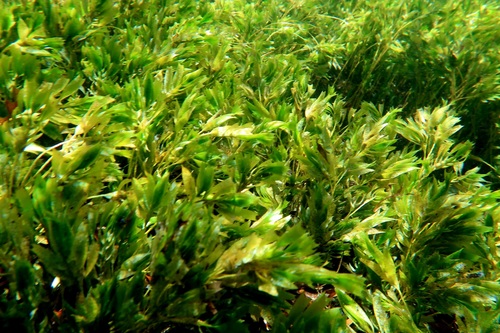
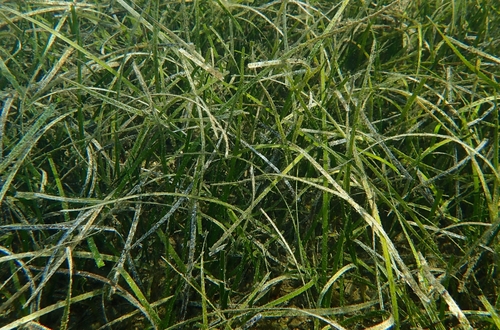
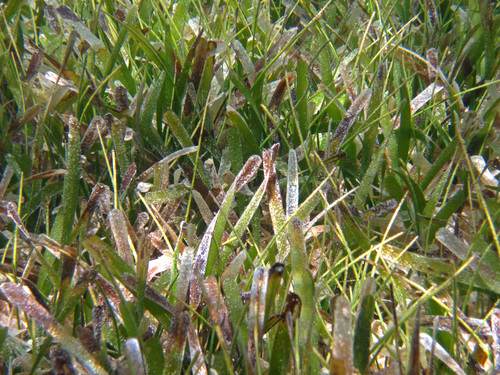
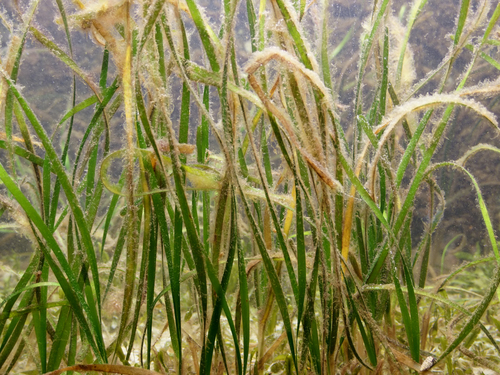
Halodule wrightii Asch. is a marine seagrass and a flowering plant that has conductive tissue, shoot systems, and rhizomes. Its leaves are flat, dark reddish-brown, up to 20 cm (7.9 in) long, and have a small number of teeth along their margins. Its fruits range from spherical to egg-shaped and measure approximately 2 mm across. This species grows primarily in muddy coastal marsh waters and in waters off the coast of many Caribbean islands. Confirmed locations where it has been found include Texas, Florida, Louisiana, Mississippi, Alabama, North Carolina, Maryland, Yucatán, Quintana Roo, Tabasco, Costa Rica, Belize, Panama, Cuba, Trinidad and Tobago, Venezuela, Brazil, and Cape Verde. Almost a century ago, it was intentionally introduced from Texas to California’s Salton Sea, but this introduced population went extinct long ago. These aquatic plants grow into dense seagrass beds, and their continuous production of new shoots and rhizomes improves habitat stabilization. The stringy structure of this seagrass lowers water turbidity and reduces movement of both sandy and muddy substrates. Seagrass beds of Halodule wrightii act as nursery habitat for young juvenile fish, providing shelter from predators and lowering competition with other species. H. wrightii also acts as a food source for multiple species of fish, marine invertebrates, and manatees. This plant can tolerate and adapt to a wide range of salinity and temperature levels. It is capable of both sexual and asexual reproduction, though flowering in this species is a rare occurrence.