About Halocynthia papillosa (Linnaeus, 1767)
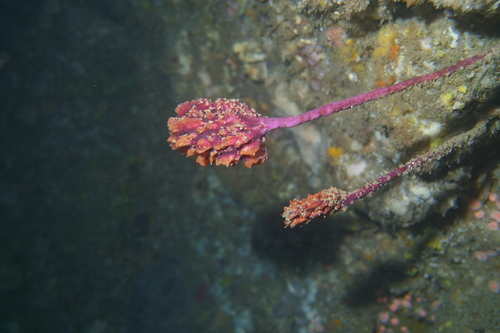
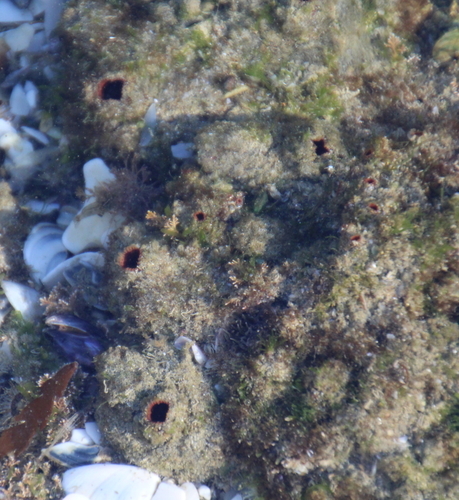
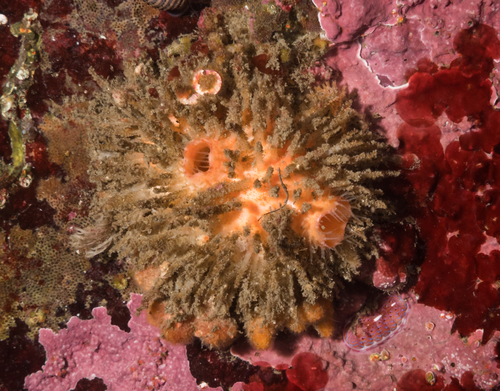
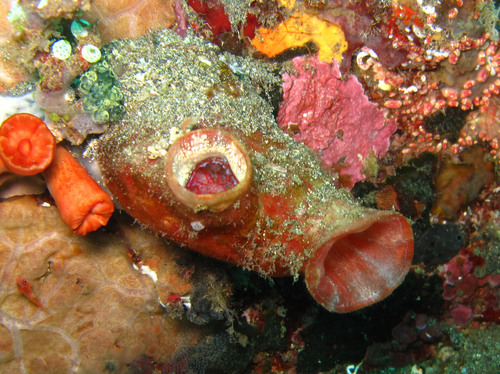
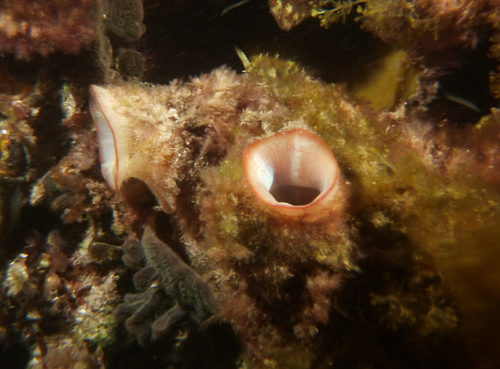
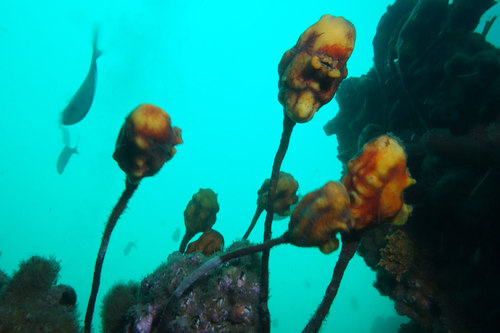
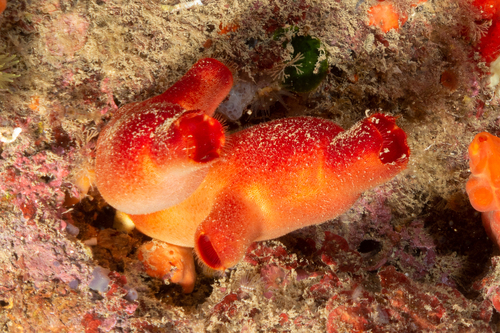
Halocynthia papillosa has a sac-like body covered by a tunic that contains cellulose-protein fibrils, which give the organism its rigid structure. True to its name, the rough outer body has a bumpy texture. It commonly attaches to rocky substrates. This organism has two siphons: the oral siphon takes in water, while the atrial siphon expels it. Its body color ranges from deep red to orange, and its size varies considerably based on habitat and depth. It typically reaches around 10 cm in height, but can grow up to 20 cm under certain conditions. It contracts when disturbed, which changes its overall size. This organism is primarily found in the Mediterranean Sea, but it is also widespread across the northeastern Atlantic, including the coasts of Portugal and the Canary Islands. It also occurs in the west Pacific Ocean, along the east coast of Australia, New Zealand, and the coasts of China, North Korea, South Korea, and Japan. This species most often lives on rocky benthic substrates at depths ranging from 2 m to over 100 m. The growth and distribution of H. papillosa is affected by the abiotic factors of temperature, salinity, and hydrodynamic conditions. It coexists with other sessile invertebrates, increasing the biodiversity of benthic systems; this includes areas with high hydrothermal activity, such as the Aegean Sea. As members of the ascidian class, Halocynthia papillosa are primarily hermaphrodites. They have seasonal reproductive cycles like other organisms, with gamete release and larval development largely controlled by temperature and photoperiod.