About Halobatrachus didactylus (Bloch & Schneider, 1801)
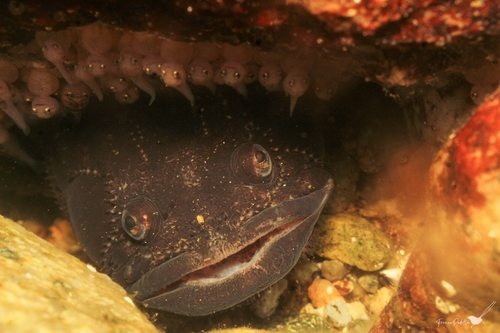
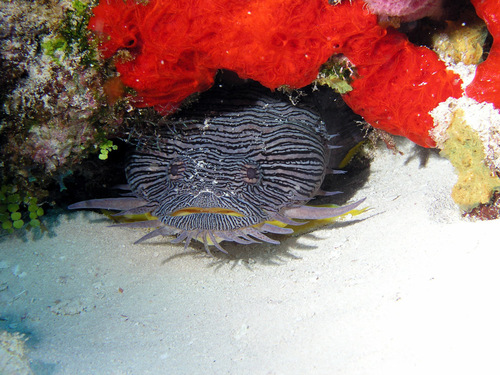
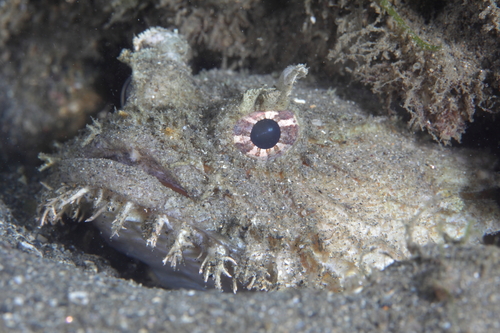
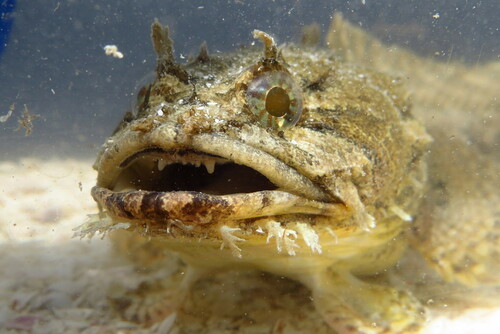
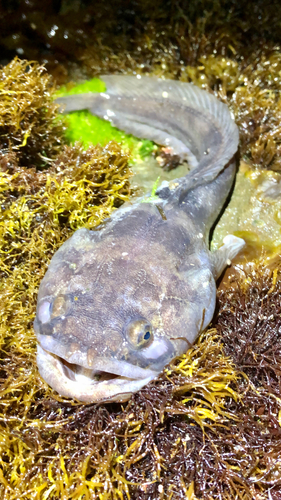
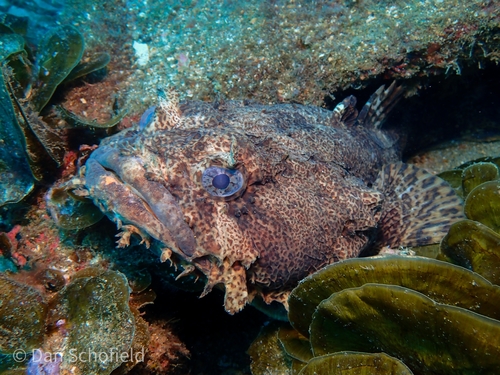
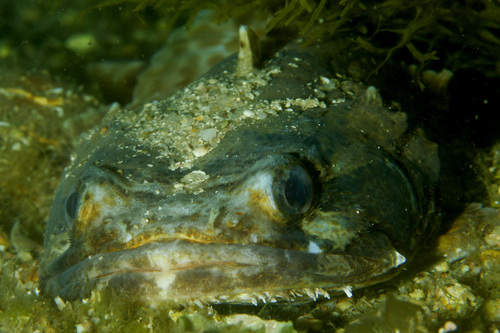
The Lusitanian toadfish, scientifically named Halobatrachus didactylus, is a toadfish species found along the Atlantic and Mediterranean coasts of western Europe and western Africa, ranging from the Bay of Biscay to Ghana. There is also an isolated, historical northern record of this species from the Norwegian side of the Kattegat. This fish can reach a total length of 50 centimetres, or 20 inches. It holds minor importance for local commercial fisheries, and is caught by artisanal fisheries as well as taken as bycatch. It is marketed fresh, and also processed into fishmeal and fish oil. Local common names for this species include gripau in Catalan, charroco, encharroco, and xarroco in Portuguese, and pez sapo in Spanish. Lusitanian toadfish are known to produce a range of different sounds, including whistles, grunts, croaks, and a distinct boatwhistle. This boatwhistle call is used both to attract females and deter rival intruding males. This is a sedentary, solitary shallow-water fish, most commonly found on soft sand or mud substrates. Individuals often lie partially buried, or hide themselves within rock crevices. It occurs at depths of less than 60 metres, or 200 feet. As a predator, the Lusitanian toadfish feeds on crustaceans, molluscs, and smaller fish. This species is oviparous; after laying eggs, the female departs, leaving the male to guard the eggs.