About Halobaena caerulea (Gmelin, 1789)
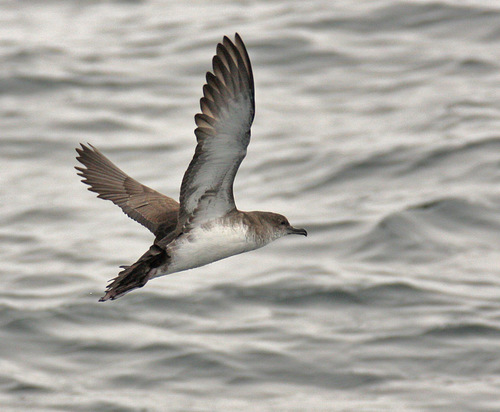
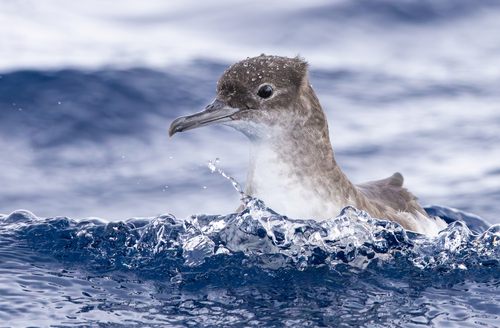
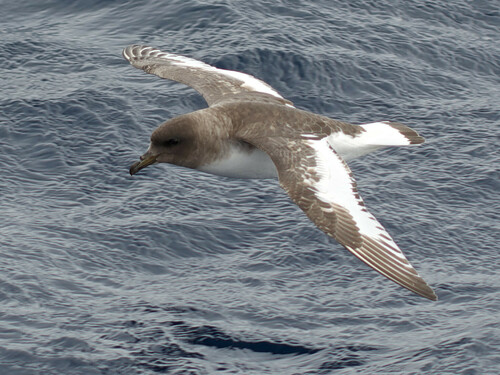
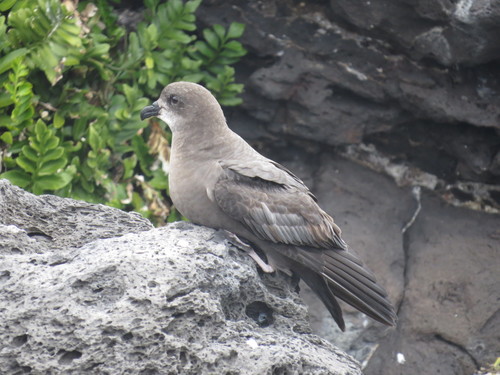
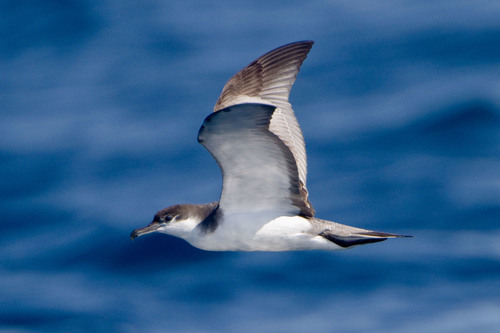
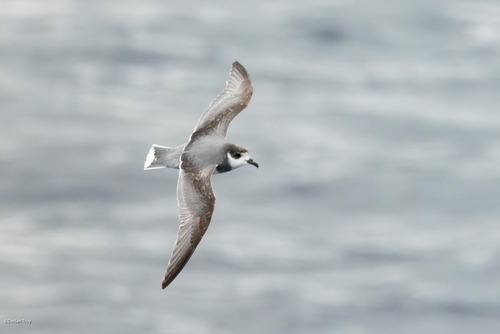
Halobaena caerulea, commonly known as the blue petrel, has predominantly blue-grey plumage, with a dark M-shaped marking that stretches across the upperwing from one wingtip to the other. It features a distinct black cap, white cheeks, and white underparts, with the exception of dark patches on the sides of the neck. Its square tail has a white tip, and it has a slender black bill. Adult blue petrels measure 26 to 32 centimeters (10 to 13 inches) in length, have a wingspan of 62 to 71 centimeters (24 to 28 inches), and weigh approximately 200 grams (7.1 ounces).
Blue petrels live in the southern oceans, and their range extends as far north as South Africa, Australia, and parts of South America. Most blue petrels only breed within a narrow latitudinal band from 47° to 56° south on either side of the Antarctic Polar Front, nesting on subantarctic islands including the Diego Ramírez Islands, Crozet Islands, Kerguelen Islands, Macquarie Island, South Georgia, and Prince Edward Island. In 2014, a breeding colony was discovered on Gough Island, located at 40° S, 10° W in the central South Atlantic Ocean. This site is more than 700 kilometers north of the species' known, usual breeding range. Breeding activity at this colony occurs later than breeding at colonies farther south, so while the colony was only discovered recently, this does not confirm that the blue petrel has recently expanded its breeding range.