About Haliotis tuberculata Linnaeus, 1758
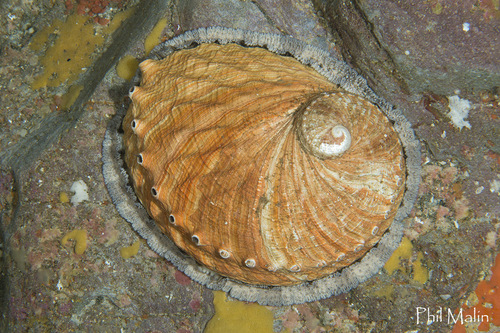
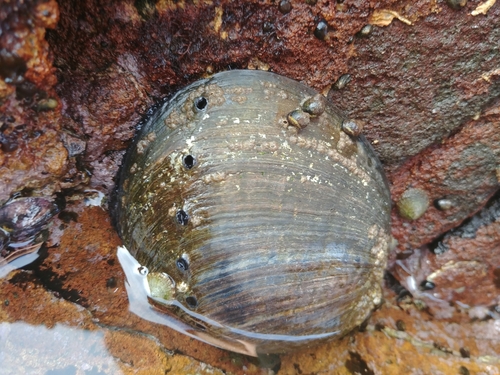
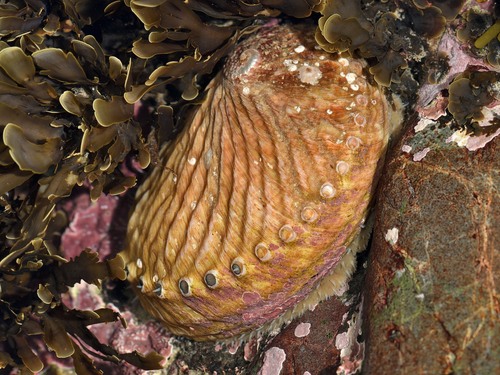
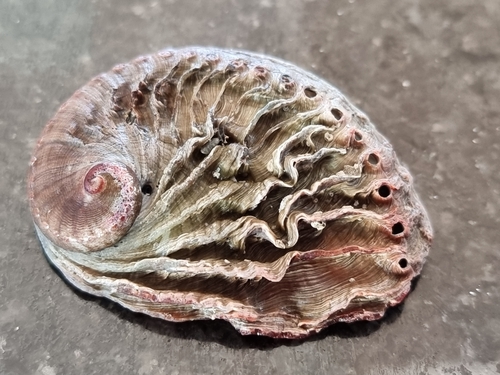
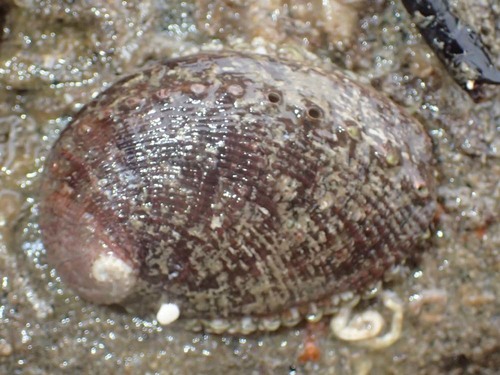
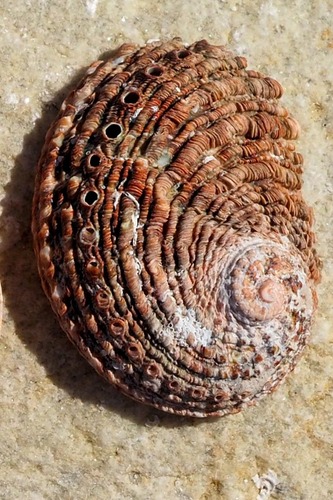
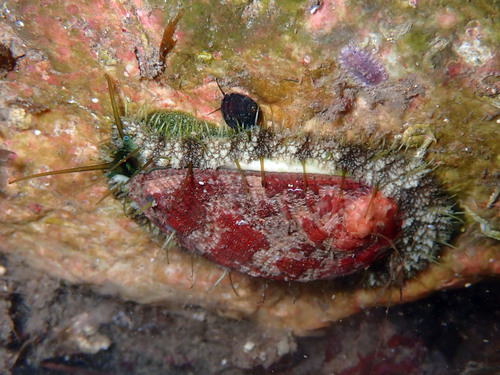
This section focuses on Haliotis tuberculata Linnaeus, 1758, covering shell morphology and distribution. The shell of this species reaches a maximum length of 10 cm (3.9 in) and maximum width of 6.5 cm (2.6 in). It is a flattened, oval, ear-shaped spiral shell with a mottled outer surface. Along the bottom margin of the shell, there is a curved row of five to seven slightly raised respiratory apertures. Short exhalant siphons extend out from the mantle through these apertures. As the animal and its shell grow, new respiratory holes form, while older holes become sealed off. These holes together form the structure called the selenizone, which develops as the shell grows. The inner surface of the shell is covered by a thick layer of iridescent mother-of-pearl. The species has a large, muscular foot, with numerous tentacles located along the epipodium, the lateral grooves between the foot and the mantle. This species lives on rocky shores in European waters, ranging from the Mediterranean Sea north to the Channel Islands. In other areas of the Atlantic Ocean, it is found across Macaronesia and West Africa.