About Haliotis rufescens Swainson, 1822
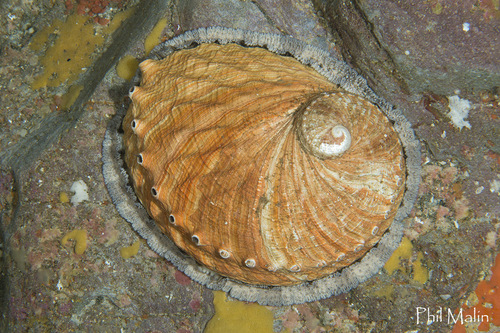
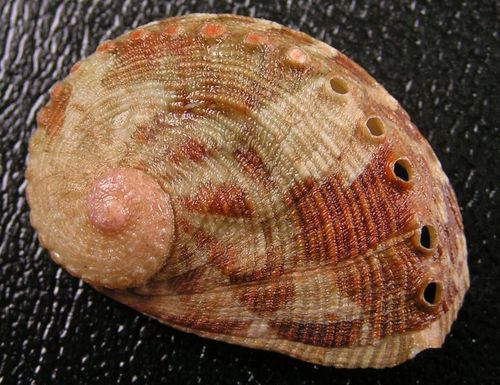
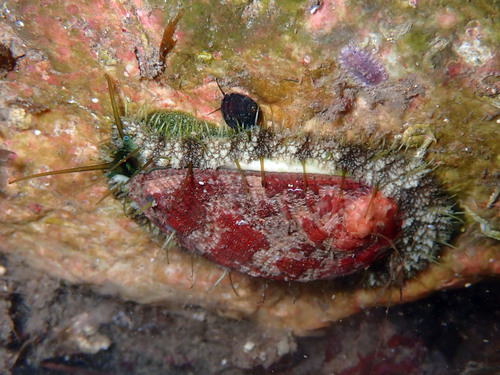
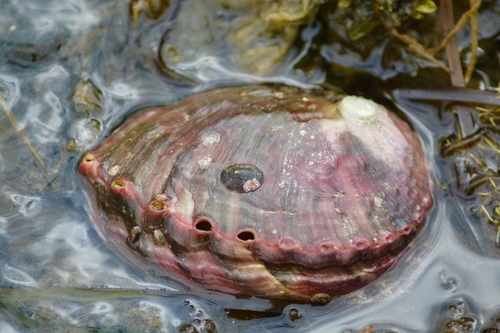
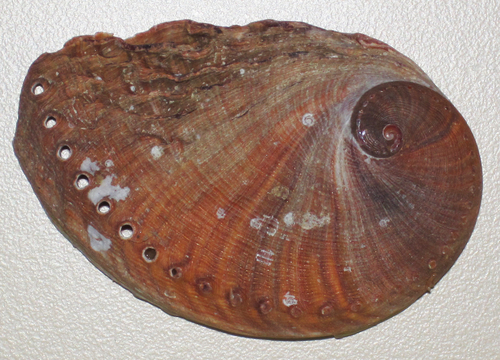
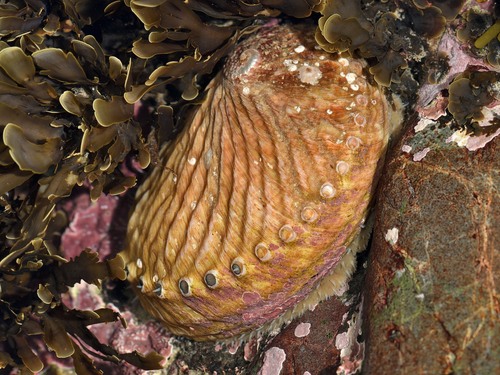
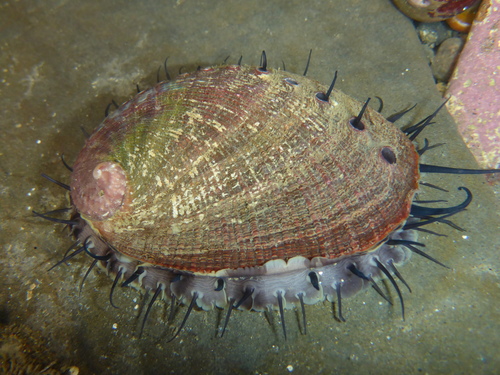
Haliotis rufescens, commonly known as red abalone, has a maximum shell length of 31 cm (12 in), making it the largest abalone species in the world. Its shell is large, thick, and dome-shaped, and is often covered in barnacles, vegetation, or other marine growth that makes it hard to see the shell’s original color and surface sculpture. Externally, the shell is usually a dull brick red. Most specimens have three to four slightly raised oval respiratory pores in the shell, though individuals with no pores or more than four pores have been recorded. These pores form a structure called the selenizone, which develops as the shell grows. The inner surface of the shell is polished and strongly iridescent. A large, prominent central muscle scar is easily visible in most red abalone shells, marking the attachment point of the species’ strong columellar muscle. This species has been used as a study subject for research into the microscopic development of nacre. Red abalone inhabit rocky areas with kelp. Adults feed on the kelp species that grow in their habitat, including giant kelp (Macrocystis pyrifera), feather boa kelp (Egregia menziesii), and bull kelp (Nereocystis luetkeana). Juvenile red abalone eat coralline algae, bacteria, and diatoms. This species can be found from the intertidal zone down to depths of more than 180 m (590 ft), but is most common at depths between 6 and 40 m (20 and 131 ft). Humans have used red abalone since prehistoric times. Red abalone shells have been found on Channel Island archaeological sites dated to almost 12,000 years old. Red abalone middens—refuse deposits where red abalone shells make up the majority of material—are common at Northern Channel Islands archaeological sites dated to between roughly 7500 and 3500 years ago. In the pre-contact era, the Native American Chumash peoples harvested this species along California’s Central coast. The Chumash and other California Indian groups also used red abalone shells to make fishhooks, beads, ornaments, and various other artifacts.