About Haliotis cyclobates Péron, 1816
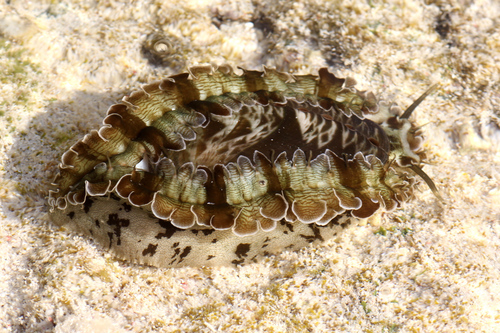
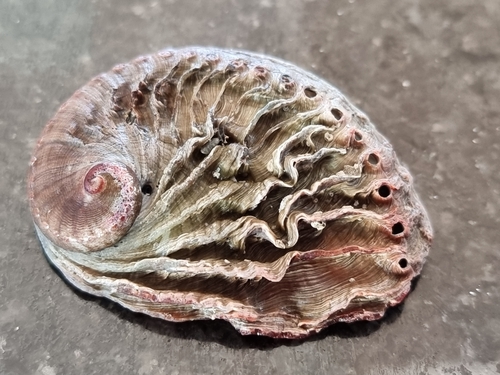
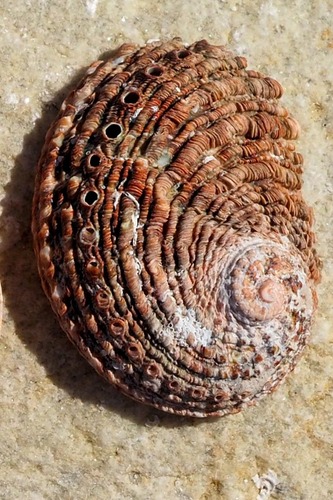
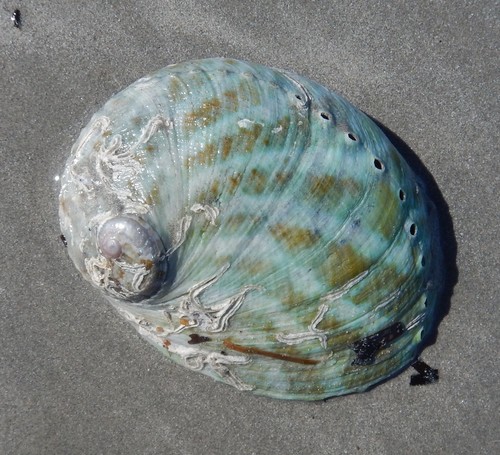
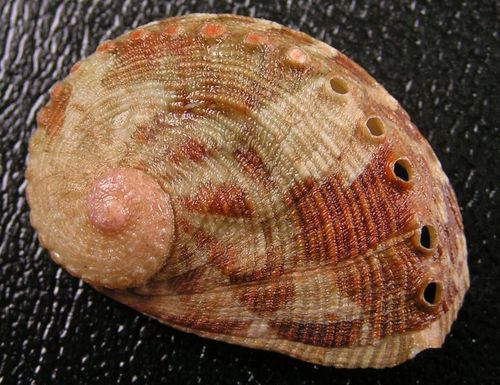
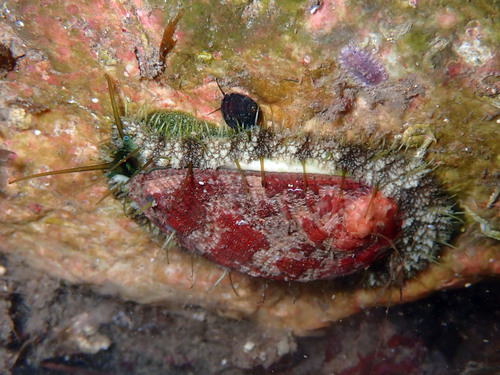
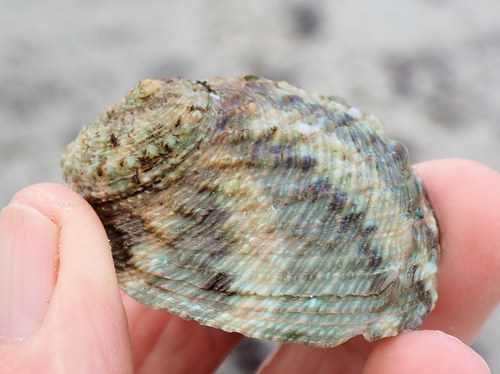
Haliotis cyclobates Péron, 1816 is a marine species of abalone endemic to Australia, found off the coasts of South Australia, Victoria, and Western Australia. The shell of this species reaches a maximum size of 60 mm. The shell is elevated, nearly circular in outline, and somewhat turbinate. The distance from the apex to the shell margin is between one-third and one-fourth greater than the shell's diameter. The spire is distinctly elevated and formed from approximately three rounded whorls. The body whorl is rounded and convex along its upper surface. The last whorl has a blunt keel at the row of perforations, and a narrower, sharper carina located a short distance below this keel; the space between the two keels is slightly concave. The entire shell surface is covered in close-set spiral cords and threads, which are sometimes slightly granose. Numerous folds radiate out from the suture, but these folds do not extend long enough to reach the periphery of the shell. The shell is colored with broad radiating patches or oblique stripes in chestnut brown, green, and flesh-color or whitish. The inner surface of the shell is silvery, with red and green iridescent reflections. The muscle impression on the inner shell is not distinct. The columellar plate is flat, not truncated at its lower edge, and slopes strongly inward. There are typically five oval perforations on the shell, with edges that are only very slightly raised, not prominently elevated.