About Halichondria panicea (Pallas, 1766)
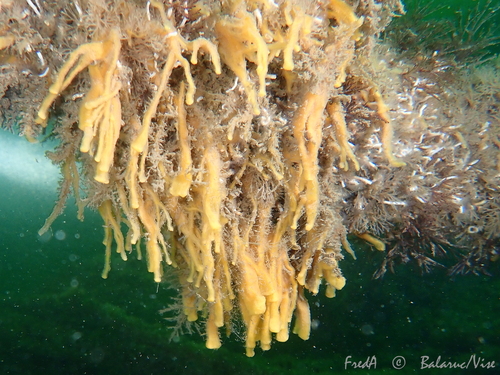
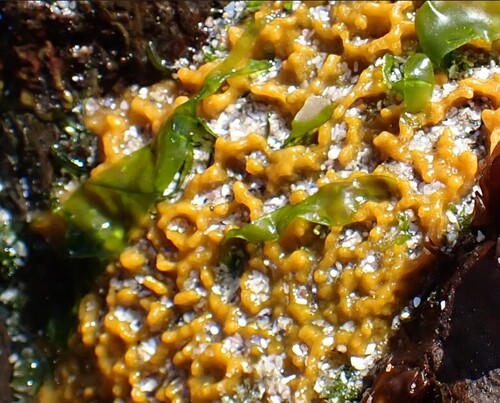
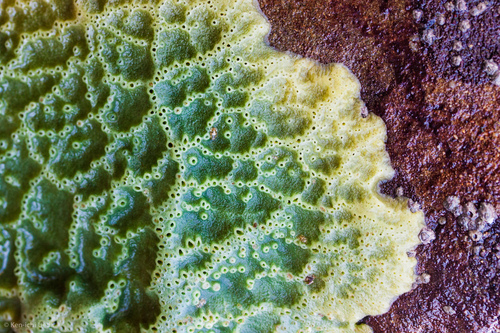
Halichondria panicea (Pallas, 1766) takes a very wide range of forms, which can make it difficult to identify. Some variants have a granular surface, a feature that inspired its common name, but other variants have a smooth, even glassy surface. The surface is often marked with pores called oscula, which can grow into tubular "chimneys" in wave-sheltered habitats. The overall form of Halichondria panicea is determined largely by its habitat: wave-exposed populations usually form thin, widespread sheets, while wave-sheltered populations often form massive encrustations up to 20 cm thick. This diversity in form has led to this species being incorrectly described as a new species 56 separate times. Its colour is also variable. The base colour is cream or grey, which is typical for specimens collected from relatively deep water. In shallower depths, the sponge is usually green, because symbiotic algae live close to the sponge's surface. At intermediate depths, the sponge is typically green in summer and cream or grey in winter. It has a smell described as like "exploded gunpowder".