About Haemodorum coccineum R.Br.
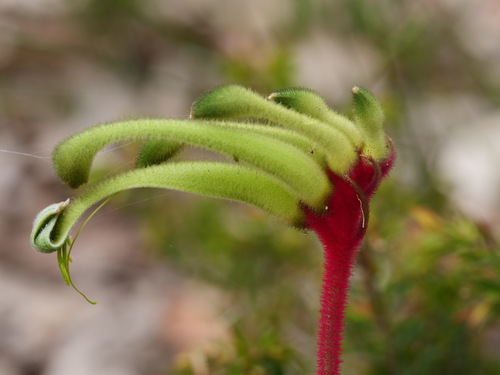
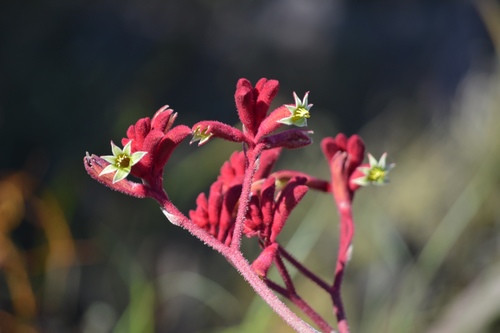
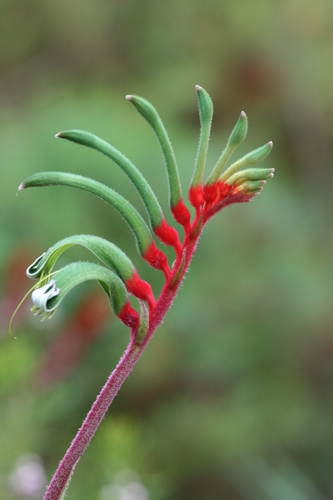
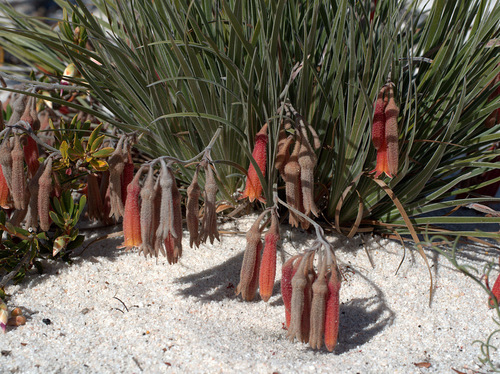
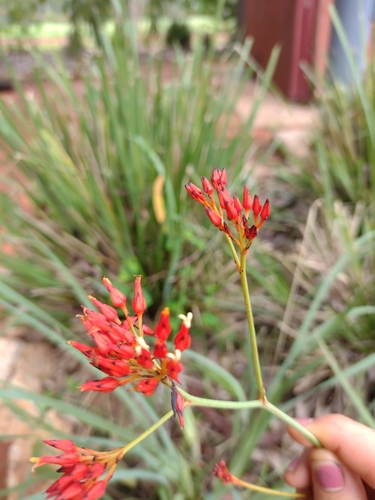
Haemodorum coccineum R.Br. is a perennial herb that grows up to one meter tall. Despite not being a grass, it has a grass-like appearance, with strap-shaped, narrow, leathery leaves growing from the plant's base. Flowering typically happens between November and March, which is the wet season of Australia's Top End; however, flowers have been recorded as early as October and as late as May. The flowers are deep red or orange-red, and grow in dense clusters on long, stiff stalks that also emerge from the base of the plant. Fruit develops between November and March, and may remain on the plant until May. The fruit are red to black, fleshy three-lobed capsules. When crushed, mature fruit release a red-purple juice.
This species is distributed across the Top End of the Northern Territory, northern Queensland, and Papua New Guinea. It grows in open woodland habitats, on gravelly or shallow lateritic soils, and sandstone.
It is suitable for use as a bedding or edging plant in native gardens. Its fruits can be used in floral arrangements. Some sources record that Indigenous Australians used this plant to treat snakebite, and used its dry stalks as fire-sticks.
Haemodorum coccineum can be propagated from seed, or through vegetative propagation by dividing its bulbous root. Plants grow best in well-drained sandy or gravelly soil and full sun. During the dry season, the above-ground parts of the plant usually die back, leaving the underground rootstock to regenerate later in the year.