About Haematoxylum brasiletto H.Karst.
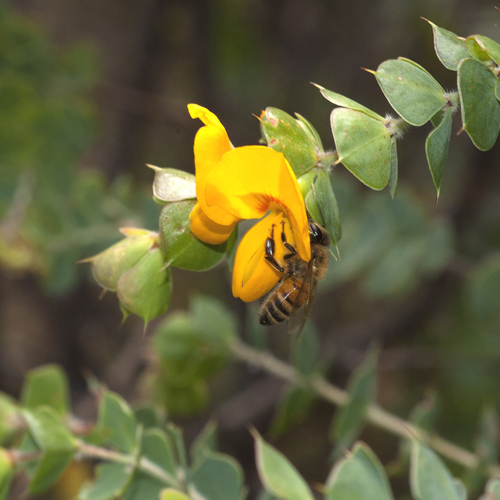
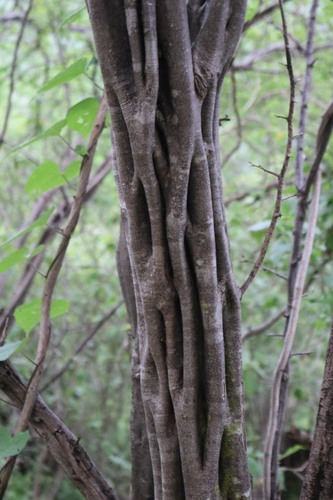
Haematoxylum brasiletto H.Karst. is a small tree or large thorny shrub that grows 7 to 15 metres high. Its trunk and larger branches are fluted, and its heartwood is deep red. This species has pinnate leaves, with three pairs of heart-shaped leaflets and no terminal leaflet. It produces clusters of yellow flowers that are typical of the subfamily Caesalpinioideae, each flower having five distinct lobes. After flowering, it forms copper-coloured seed pods that split laterally when ripe, rather than splitting along their edges. The seeds are black and kidney-shaped. H. brasiletto is native to Mexico, Belize, Costa Rica, Guatemala, El Salvador, Honduras, Nicaragua, and Colombia. It grows in a variety of habitats, including deciduous tropical forests, xerophytic scrub, and montane forests, where it grows alongside oak and pine. In the desert scrub of Baja California, it grows in association with elephant trees (Bursera microphylla), woodrose (Merremia aurea), and the large Cardón cactus (Pachycereus pringlei). The wood of H. brasiletto is used to make bows for stringed instruments. This tree produces other valuable products and has been exported for several centuries. It was included in the 1740 London Pharmacopoeia, which listed logwood tea from this species as effective against tuberculosis and dysentery. Its heartwood is used to produce dye for wool and cotton cloth, and a pink colouring agent that is used in pharmaceuticals and toothpaste. The pigments hematoxylin and hematein can be extracted from it; these are complex phenols similar to bioflavonoids. Tarahumara Indians use extracts from its hardwood chips as remedies. Ethnobotanical uses recorded in Duke's Phytochemical and Ethnobotanical Databases include use as an astringent, a dentifrice, and a refrigerant, as well as for treating condyloma, erysipelas, fever, jaundice, inflammation, and stomach pain. An extract made from boiled heartwood chips is reported to have antibiotic properties, reduce fever, and act as a tonic to strengthen the body.