About Haematopus longirostris Vieillot, 1817
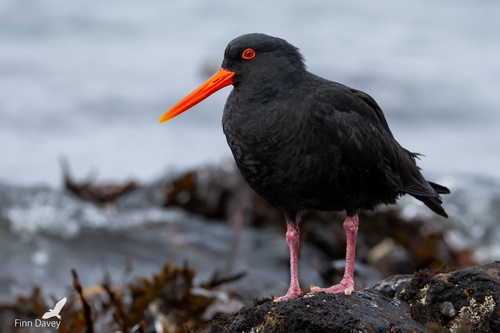
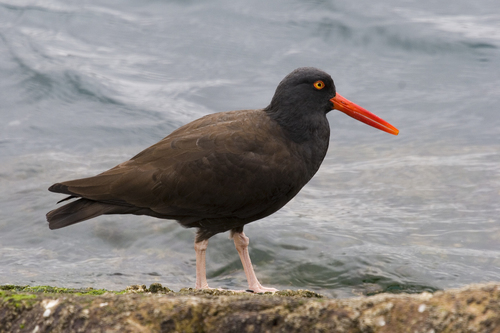
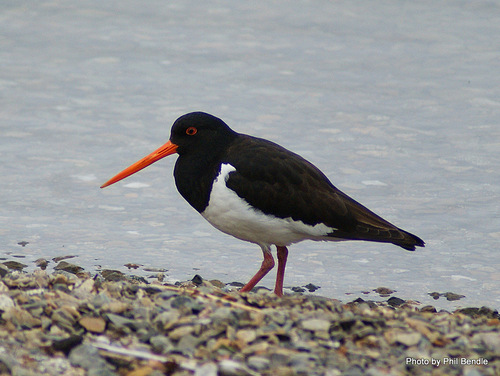
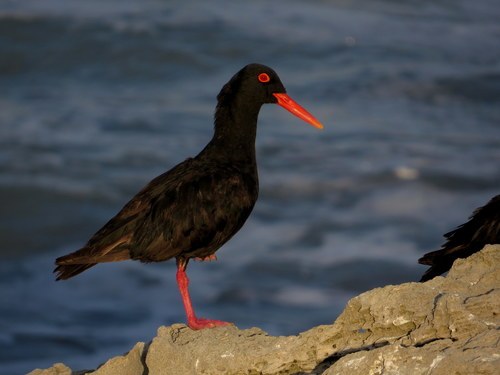
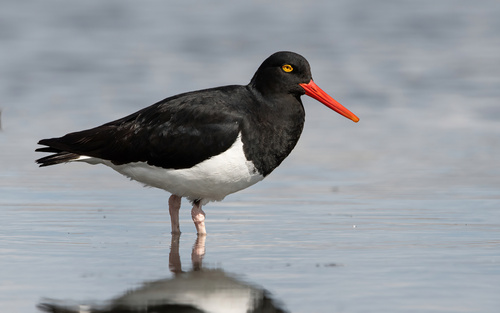
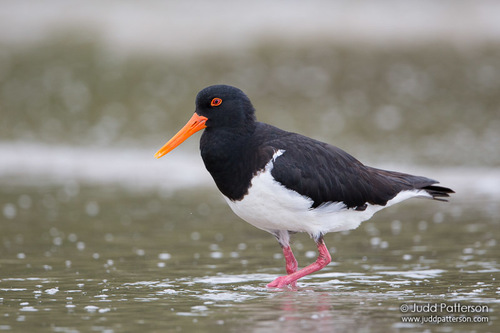
The common name 'oystercatcher' is something of a misnomer for Haematopus longirostris, the pied oystercatcher, because this species seldom eats oysters. Oysters live primarily on rocky coastlines, while pied oystercatchers most often frequent sandy coastlines. On sandy coastlines, they feed mainly on bivalve molluscs, which they pry open using their specially adapted bill. These bill adaptations let pied oystercatchers slip their bill between the ventral edges of these shelled organisms, so they can sever the adductor muscle holding the shells closed and reach the edible flesh inside. This Australian species is easy to recognize by its distinctive 5–8 cm long orange-red beak, slender pink legs, and black and white plumage. When the wings are extended, a white wing-stripe can also be seen. Males and females have very little visible differentiation, with the only notable difference being that males generally have a shorter, wider beak.