About Haematopus leucopodus Garnot, 1826
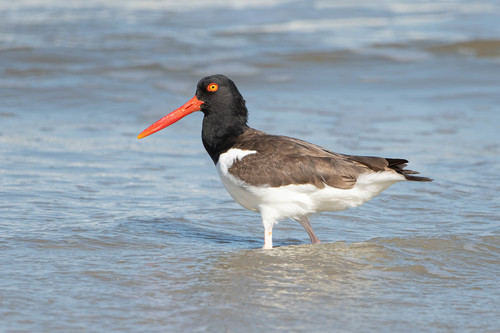
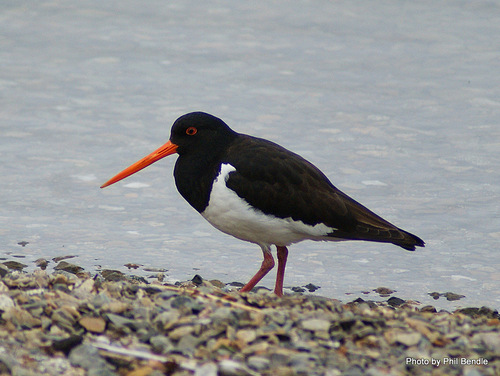
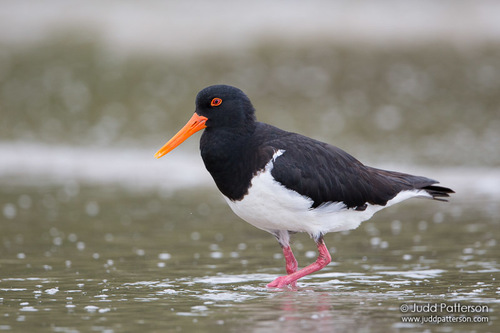
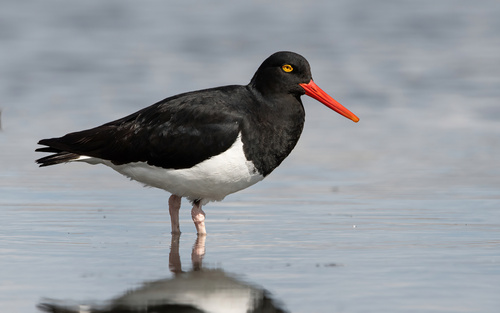
The Magellanic oystercatcher (scientific name Haematopus leucopodus Garnot, 1826) measures between 42 and 46 cm (17 and 18 in) in length. Males weigh around 600 g (21 oz), while females are slightly heavier. This species has a long orange beak, yellow eyes, a yellow eye ring, and yellow legs. Its head, breast, back, wings, and tail are black, while its underparts are white, as are the inner wing feathers visible when the bird is in flight. It closely resembles the American oystercatcher (Haematopus palliatus) in appearance, but can be told apart by the yellow bare skin ring surrounding its yellow eye and its white secondary feathers. No other oystercatcher species shares both of these features, and it is also the only New World oystercatcher to have a black back rather than a brown one. Its call is a repeated high-pitched "pee-pee", similar to calls of other oystercatchers. This species is native to the southern tip of South America. Its range covers southern Argentina, Tierra del Fuego, other nearby islands, and the Falkland Islands. It also occurs on South Georgia and the South Sandwich Islands, but its status at this location is unclear. It breeds inland on upland grasslands, and lives on the coast during the non-breeding season. During the breeding season when it is inland, the Magellanic oystercatcher feeds mostly on earthworms and insect larvae, probing soft ground and mud with its sharp beak. During the rest of the year when it is on the coast, it forages for mussels and limpets, and also feeds on crabs and polychaete worms. When disturbed near its nest, it uses multiple strategies to draw attention away from its eggs and chicks. These strategies include false-brooding, where it moves to sit on an imaginary nest site, and tail-flagging, a ritual aggressive display that involves raising the tail and wings. It also uses a distinctive peeping call to warn intruders away.