About Haematopota pluvialis (Linnaeus, 1758)
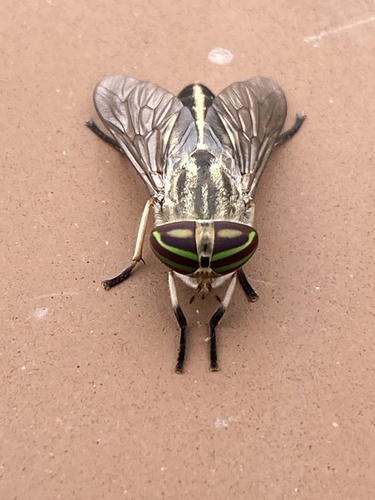
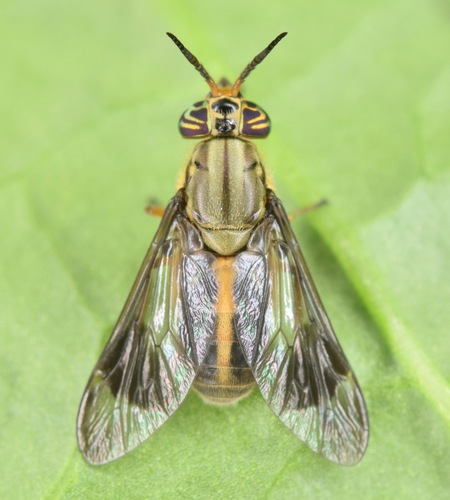
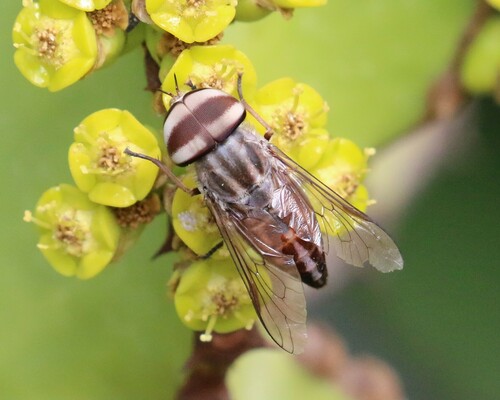
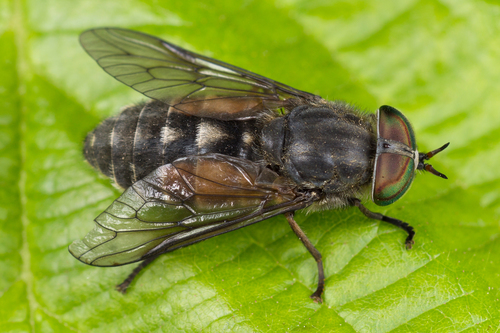
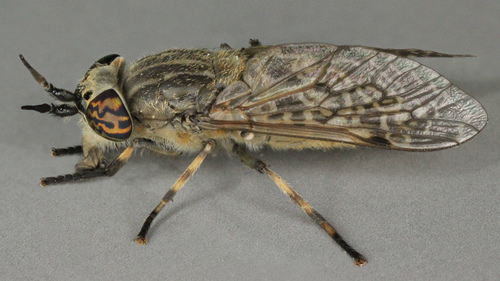
Common horse flies of the species Haematopota pluvialis can reach a length of 5–11.5 millimetres (0.20–0.45 in), with a wingspan of 8–10 mm. This species has large compound eyes required for locating prey. The eyes are hairy, brightly colored, and have stripes that extend over most of the eye. In males, the eyes touch at the centre of the frons, and the colored stripes are only found on the lower part of the eyes. The first antennal segment is quite bulbous, and has a strong sub-apical notch in females. The thorax is grey, marked with black longitudinal stripes. The abdomen has a dark background, with a series of lateral pale spots, and clearer bands at the end of each black segment. The wings also have a distinctive pattern: they are dark mottled with several clear spots. The legs are black, with yellowish-brown rings. This species is similar to the also common Haematopota crassicornis, but differs from that species in its orange third antennal segment, the presence of the sub-apical notch, and overall brown colouration, while Haematopota crassicornis often has a grey tinge. This species is present across most of Europe, the Near East, and the eastern Palearctic realm. It mainly occurs on heath and moorland, and along spruce forest edges.