About Haemaphysalis longicornis Neumann, 1901
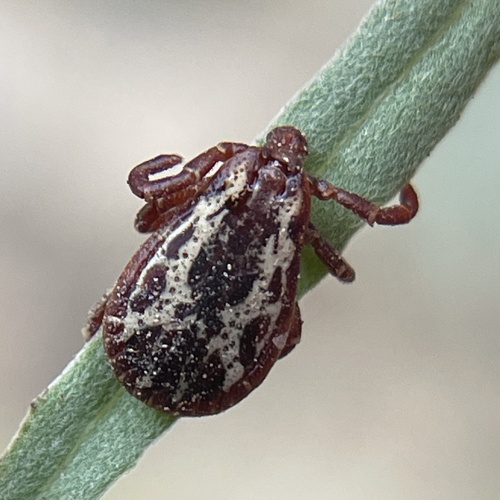
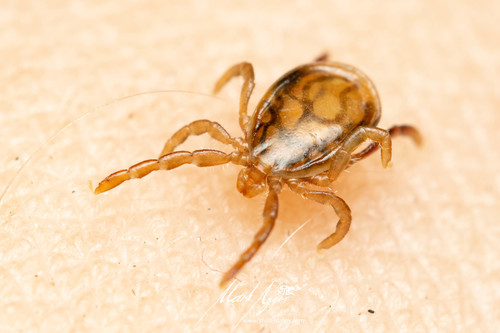
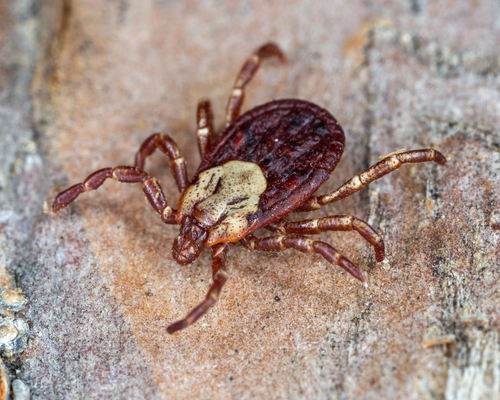
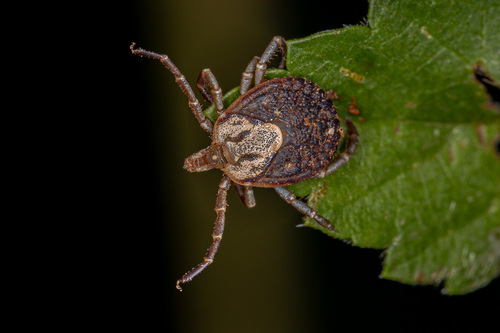
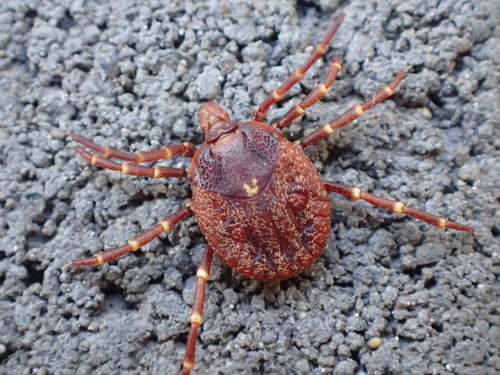
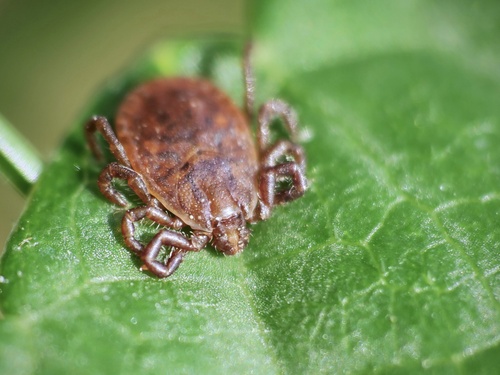
Haemaphysalis longicornis, commonly known as the Asian longhorned tick, longhorned tick, bush tick, Asian tick, or cattle tick, is a parasitic arachnid in the hard tick family Ixodidae. This tick is a well-documented livestock pest, particularly in New Zealand. It can transmit theileriosis to cattle, but this disease is not transmitted to humans from this tick. However, the species has been linked to multiple other tickborne diseases that affect humans. An unfed adult female of this species is typically between 2.0 and 2.6 mm long, and 1.5 to 1.8 mm wide. When engorged with blood, females grow to reach 9.8 mm long and 8.2 mm wide. To tell this species apart from other members of the genus Haemaphysalis, microscopic examination of small, subtle physical features is required. The Asian longhorned tick is native to temperate regions of East and Central Asia, including China, Korea, and Japan. It is also native to several Pacific islands, including Australia, New Zealand, and Fiji. Prior to 9 November 2017, the species was not confirmed to be present on the mainland of the United States, though it had been intercepted at U.S. ports on imported animals and materials at least 12 times before this date. The first confirmed mainland U.S. discovery was on a sheep farm in Hunterdon County, New Jersey. As of the current record, the tick has been found in twelve U.S. states: New Jersey, Virginia, West Virginia, North Carolina, South Carolina, Pennsylvania, New York, Arkansas, Maryland, Connecticut, Ohio, and Maine. Eradication attempts targeting the tick in New Jersey were unsuccessful. The tick was able to successfully survive through winter, and has since become an established invasive species in the state. It is possible that the tick was present in the eastern United States for several years before it was first detected.