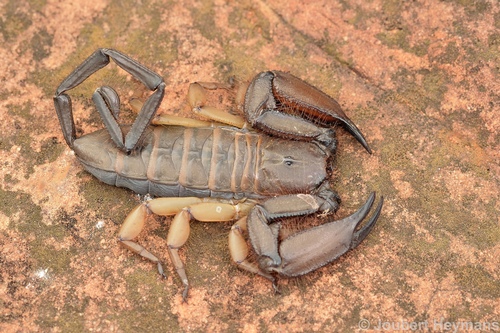
About Hadogenes troglodytes (Peters, 1861)
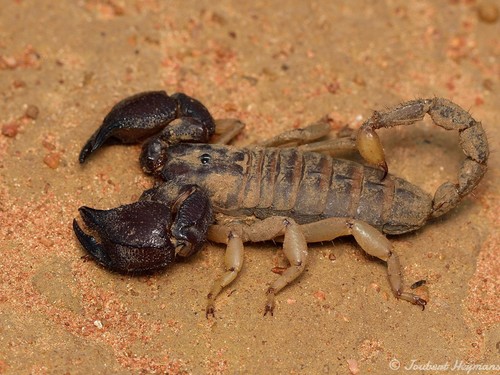
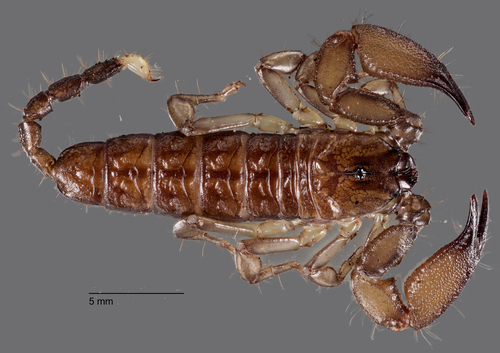
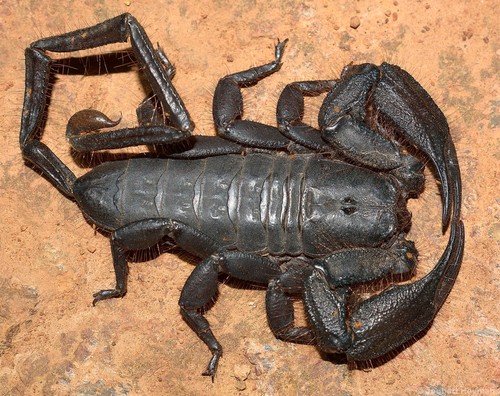
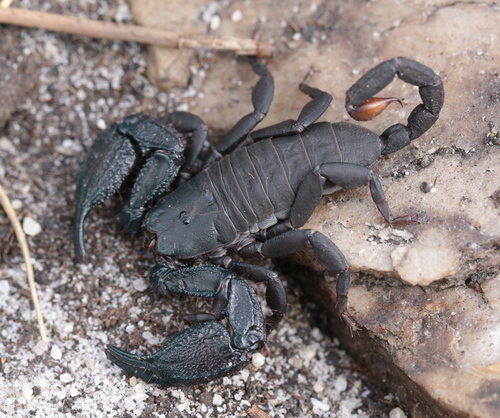
Hadogenes troglodytes shares the general overall body appearance of other members of the genus Hadogenes. Its carapace, pedipalps, chela, sternites, and metasoma are all flattened, which allows it to maneuver into and out of small cracks and crevices abundant in the rocky outcrops where this species is endemic. It is characterized by highly specialized curved telotarsal claws that let it move quickly through its native habitat, but these claws hinder its movement on looser substrates like sand. The carapace, pedipalps, and metasoma are all black, while the legs and chela are pale to yellow. Compared to other similarly sized scorpion species, the metasoma and stinger of Hadogenes troglodytes are comparatively small. This species is known from Limpopo province, South Africa, and reaches the northern parts of Mpumalanga province. It also occurs further north into Botswana, Zimbabwe, and western Mozambique. Hadogenes troglodytes thrives in slightly humid rocky environments, and ideal habitat for this species has plenty of cracks and crevices available. This species remains highly localized, and individuals typically move only up and down a single rocky outcrop for their entire lives. It is unable to travel across sand for extended periods, and will die of exposure when attempting to do so. Hadogenes troglodytes is currently threatened by habitat loss caused by mining activity.