About Hadena irregularis Hufnagel, 1766
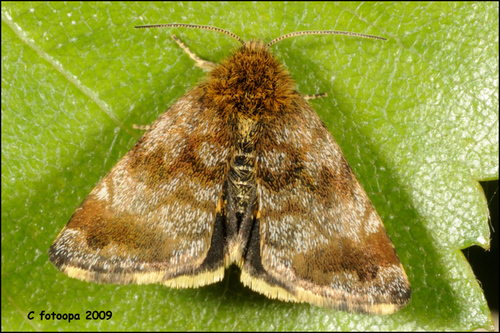
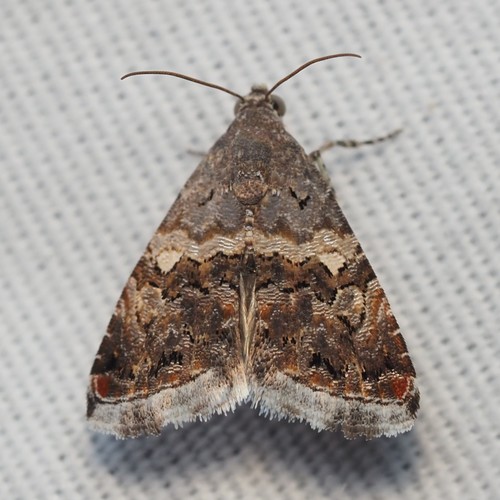
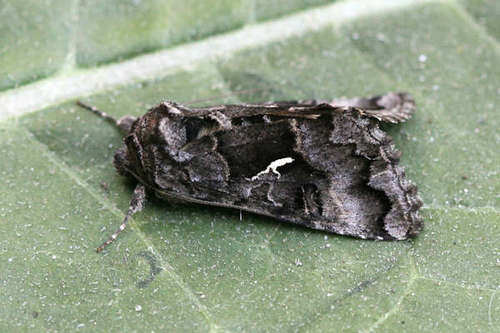
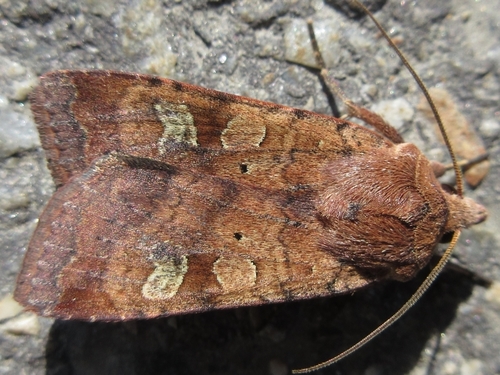
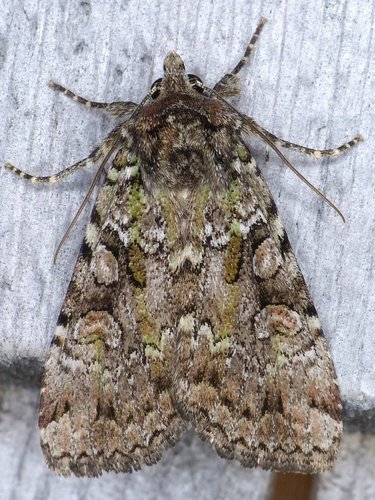
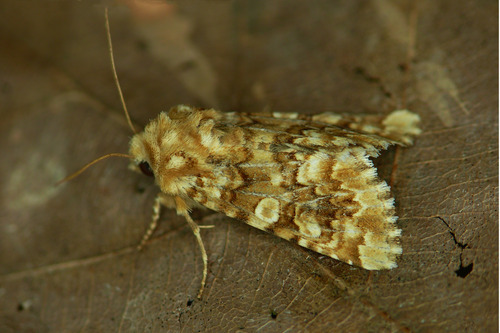
Hadena irregularis Hufnagel, 1766, commonly called the Viper's Bugloss, is a species of moth in the family Noctuidae. This moth is found in Europe, and it has a wingspan of 32–36 mm. Meyrick's description of the moth goes as follows: the forewings are whitish-ochreous, irregularly suffused with pale ochreous brownish. The first and second lines are externally edged with ochreous brownish, and internally edged with dark brown. The median line is ochreous brown. The orbicular and reniform markings are outlined with pale color. The subterminal line is pale, and edged anteriorly with ochreous-brown. The termen is unmarked, and the cilia are barred. The hindwings are light fuscous, with a darker postmedian line and darker subterminal band. Yellow grey is the most common color for the larvae of this species. Larvae have brownish lateral and dorsal lines, as well as darker angled spots that open toward the front of the dorsum. The reddish-brown pupa bears two short, curved tips on its cremaster. Depending on location, adult moths fly from July to August. The larvae feed within the seed-capsules of Silene otites, and also feed on Gypsophila species. In 1998, the government of the United Kingdom removed Hadena irregularis from schedule 5 (animals) of the 1981 Wildlife and Countryside Act, as the species is believed to be extinct there. The hypothesized cause of its extinction in the United Kingdom is habitat destruction, particularly the loss of its food source, which was limited to Spanish catchfly, Silene otites, within the country.