About Hackelia deflexa (Wahlenb.) Opiz
Scientific name: Hackelia deflexa (Wahlenb.) Opiz.
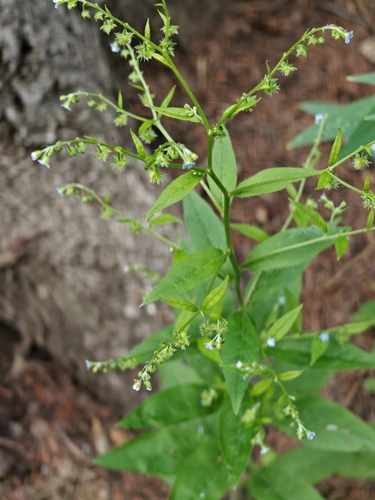
Hackelia deflexa reaches an average height of 2–3 ft (0.61–0.91 m). Its ovate basal leaves have stalks and rounded tips. Upper leaves get progressively smaller, and lose their stalks as they grow higher on the plant. Leaves measure 5 to 12 cm (2.0 to 4.7 in) long and up to just over 3 cm (1.2 in) wide. The upper leaf surface is rough in texture and hairy. Stem leaves grow alternately on generally erect, single stems that are much branched and covered throughout with short fine hairs. These stem leaves are narrowly lance-elliptic, tapered equally at both ends, and have a pointed or blunt tip.
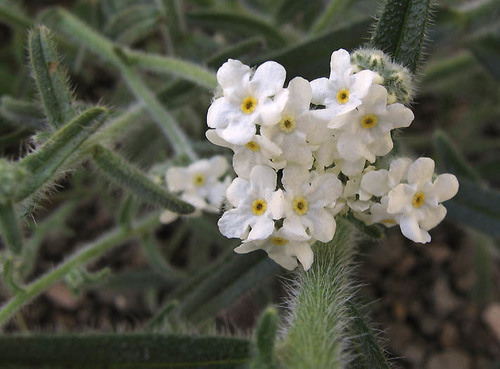
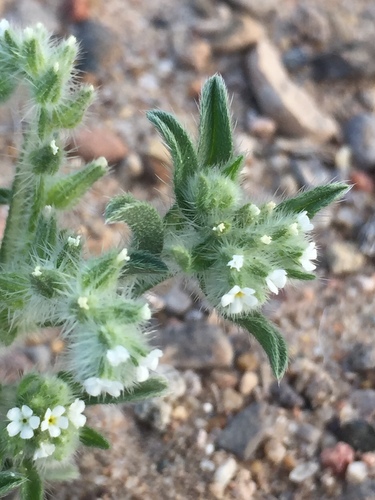
This species propagates by seed. It produces light blue to white flowers, sometimes with a purplish tint, that have 5 petals. After flowering and pollination, it forms a small nutlet covered in tiny prickly barbs. These barbs allow the nutlet to stick to animal fur and human clothing when brushed against, letting seeds be transported and dispersed wherever the carrier travels.
Hackelia deflexa is native to many northern regions: across most of Canada (it is listed as S3 vulnerable in Alberta and S1 critically imperiled in New Brunswick), the northern United States, Europe (including Spain, France, Italy, Austria, Romania, Ukraine, Russia, Sweden, and Switzerland, among others), Korea, and Japan (where it is critically endangered). It grows in moist woods and thickets, in habitats that are shaded, partially shaded, or sunny.