About Habronattus decorus (Blackwall, 1846)
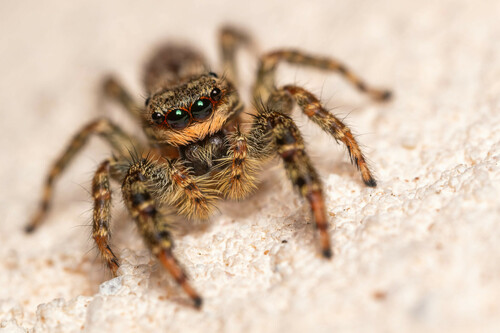
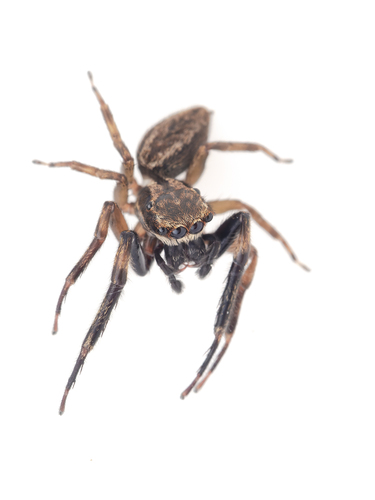
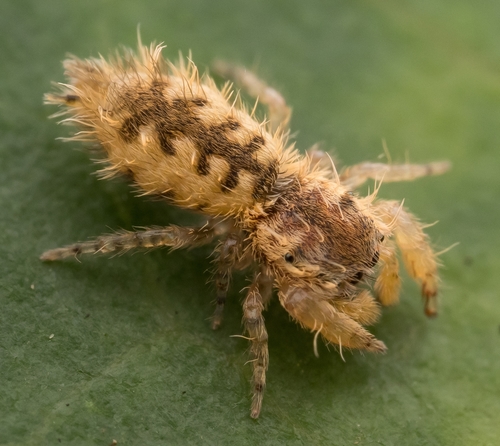
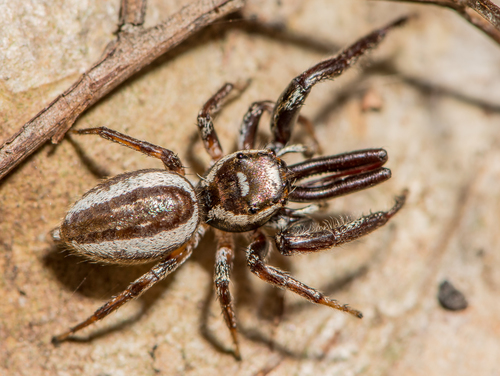
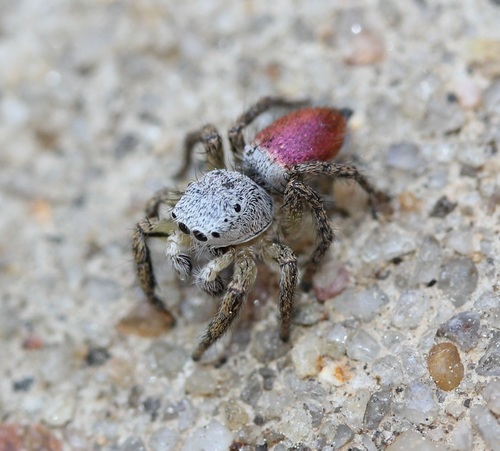
This species, Habronattus decorus, was first described by Blackwall in 1846. Males have a total body length of approximately 5 mm (0.2 in), and the cephalothorax accounts for slightly more than half of this total length. The carapace ranges in color from black to brownish, and is covered with irregular lines of gray to white scales. Specimens collected from peninsular Florida often have iridescent scales on their ocular area. Most of the upper surface of the male abdomen is covered by a dark reddish patch, which is in turn covered with iridescent rose to bluish scales. Individual members of this species vary a great deal in their overall coloration. Females are larger than males, with a total body length of approximately 6.5 mm (0.3 in). The female carapace has fewer white hairs than the male. The red pigment and iridescent rose scales found on the male abdomen are not present in females; instead, the female abdomen has multiple dark brown stripes, with two wider stripes surrounding a central yellowish area. Habronattus decorus is distributed across the northern United States and southern Canada. Further to the south, its range is limited to the eastern side of the United States, stretching from Texas to Florida. It has not been recorded living in the region from California to western Texas.