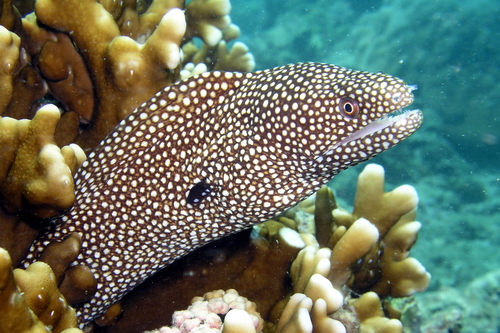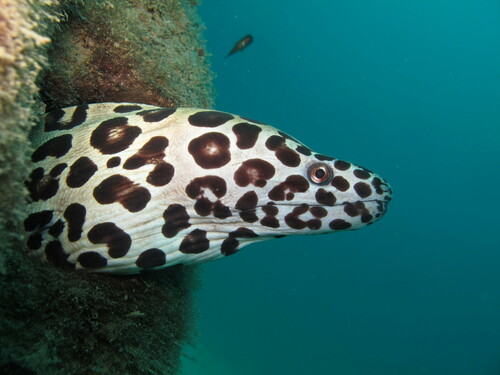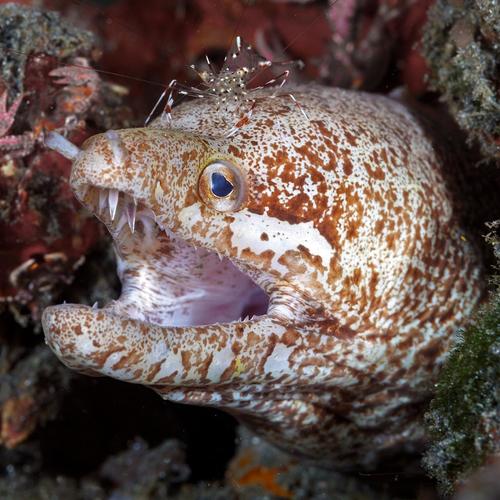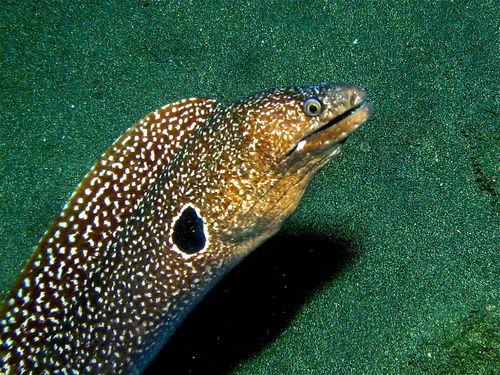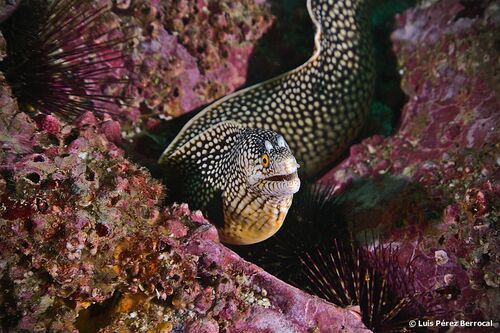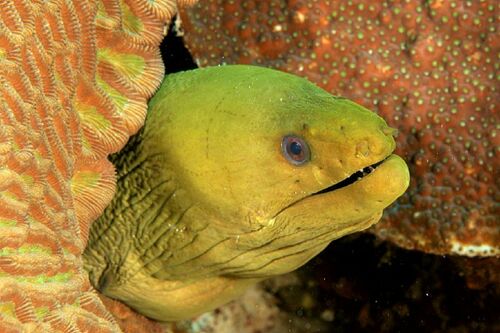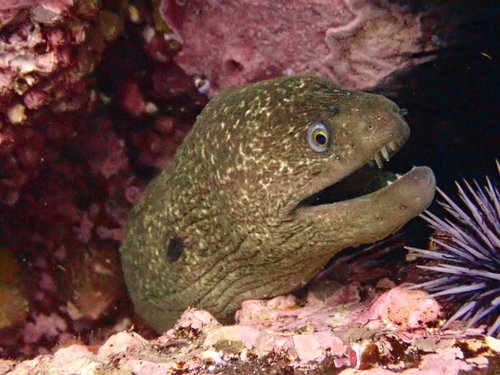
About Gymnothorax mordax (Ayres, 1859)
The California moray, with the scientific name Gymnothorax mordax, is a species of moray eel that belongs to the family Muraenidae. Its range in the eastern Pacific stretches from just north of Santa Barbara to Santa Maria Bay in Baja California. It is the only moray eel species found off the coast of California, and one of the few known examples of a subtropical moray. This species typically lives in boulder or cobble habitats at depths up to 40 meters. California morays can reach a length of about 5 feet (1.52 meters), and are thought to have a lifespan of 22 to 26 years or more. Like all other morays, California morays lack pelvic fins, pectoral fins, and gill covers. California morays are commonly seen on the rocky reefs surrounding southern California islands, most notably Catalina Island in the California Channel Islands, as well as other Pacific islands. Their full geographic range extends from Point Conception, California to Magdalena Bay, Baja California. Juvenile California morays can live in tide pools, while adult members of the species live in deeper water. Adult California morays have high site fidelity, staying in the same general area for their entire adult lives. It is thought that California morays mate and spawn in the warm waters off the coast of Baja Mexico. Their larvae are carried northward to California during winter or El Niño Southern Oscillation events. At least one study suggests this species does not reproduce in the northernmost parts of its range, because water temperatures there are too cold for gonadal development. One study used otoliths (ear bones) from California morays collected at Catalina Island to estimate individual ages. When cross-referenced with data from the Oceanic Niño Index, this analysis found that most of the examined individuals likely arrived at Catalina Island because of an El Niño Southern Oscillation event. During an ENSO event, larvae drift north carried by the northward-flowing Davidson Current. Egg fertilization takes place in the water column. While the pelagic larval duration of G. mordax larvae is not known, studies of related species indicate the larval stage lasts for several months in the open ocean before larvae settle on reefs.