About Gymnosporangium clavariiforme (Wulfen) DC.
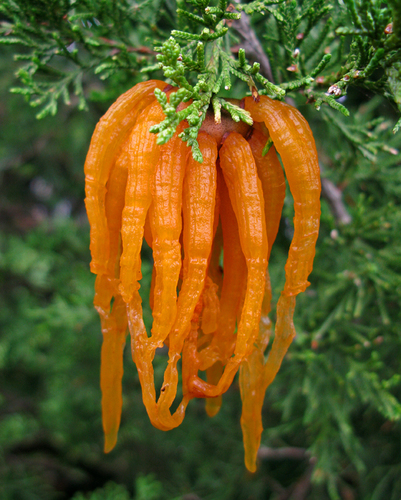
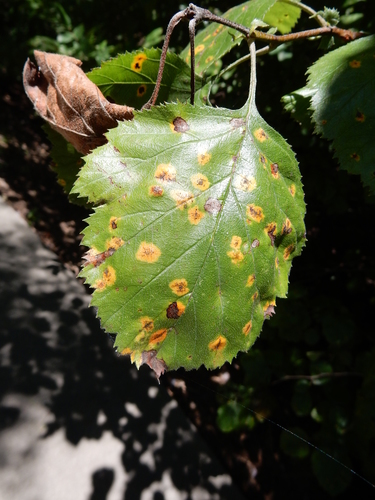
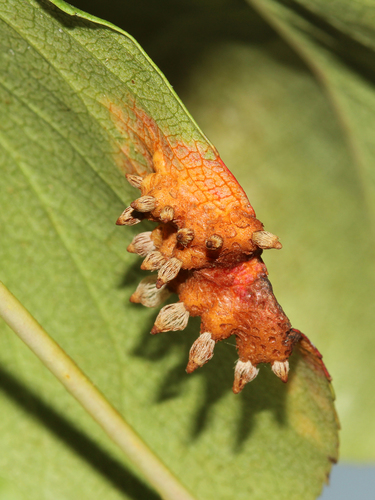
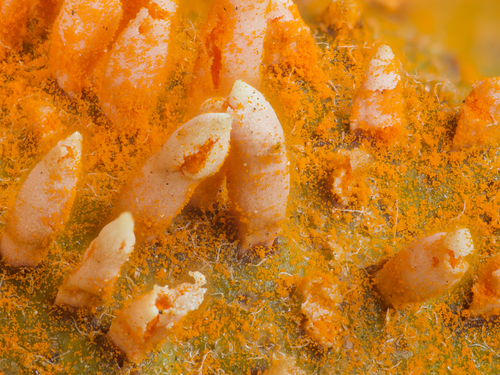
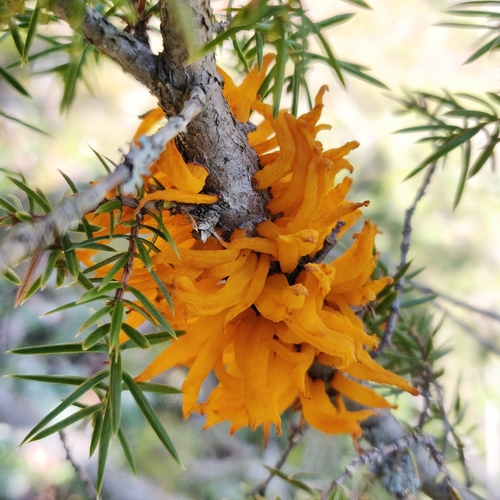
Gymnosporangium clavariiforme, commonly known as tongues of fire, is a species of rust fungus that requires alternating infection of two different host types: junipers (genus Juniperus) and hawthorns to complete its life cycle. Junipers are the primary hosts for this fungus. On junipers, G. clavariiforme grows clusters of orange, tentacle-shaped spore structures called telial horns. When exposed to moisture, these telial horns expand and take on a jelly-like texture. Mature spores are released from the horns and carried by wind to reach new hawthorn hosts, where they initiate infection. On the secondary hosts, hawthorns, the fungus forms yellowish depressed lesions on the leaves. It can also infect hawthorn fruit, where it develops whitish spore tubes that grow in a formation resembling a Medusa head. After developing on hawthorns, new spores are released, and these spores must infect a juniper to complete the full life cycle. Gymnosporangium clavariiforme does not cause serious damage to its primary juniper hosts. However, infected hawthorn trees can experience serious reductions in their haw yield as a result of infection.