About Gymnopus fusipes (Bull.) Gray
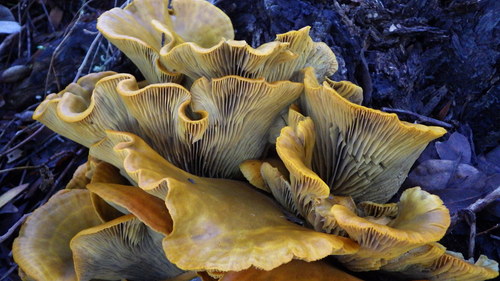
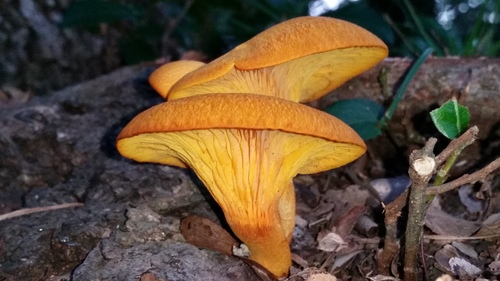
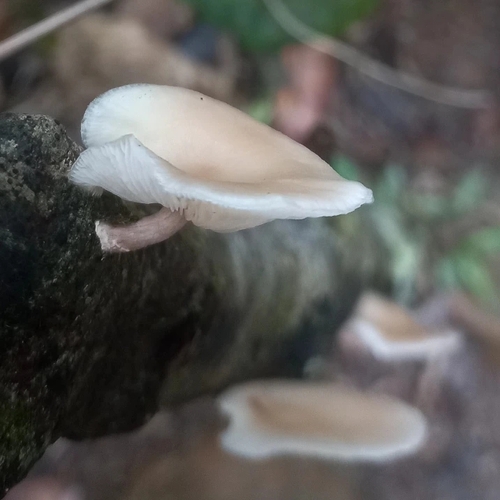
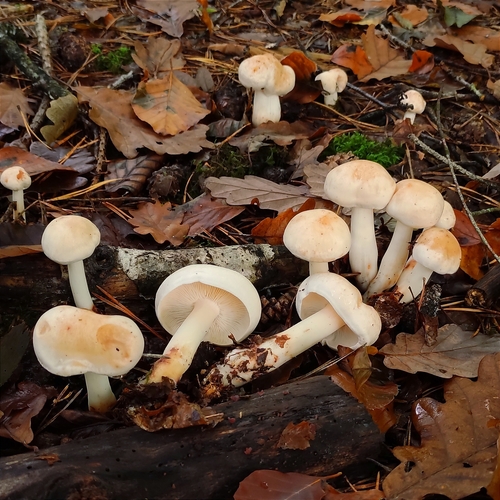
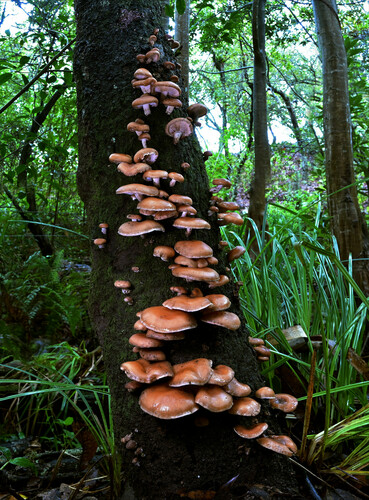
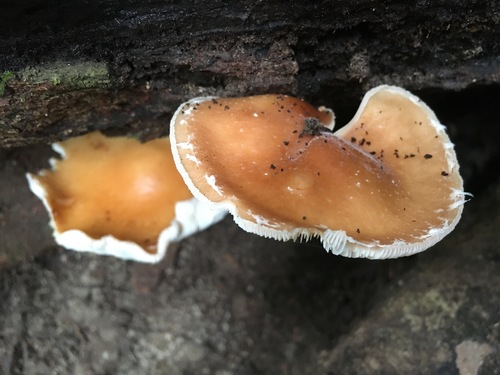
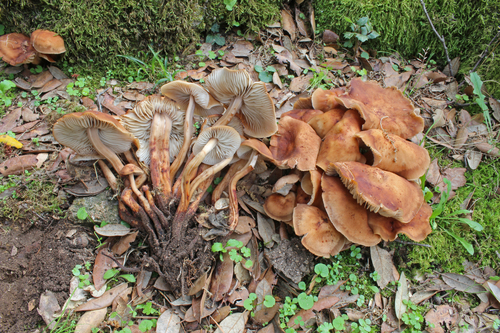
This species of mushroom is highly variable in form, but it is easy to recognize upon close examination at least when it is not young, because of its distinctive tough stem. All description sections below draw on the cited references for this species. Microscopically, the ellipsoidal spores of Gymnopus fusipes measure approximately 4.5-6 μm by 3–4.5 μm. Clamp connections are present in all tissues of this fungus. In terms of distribution, habitat, and ecology, Gymnopus fusipes typically grows in often large clumps at the base of trees, or on tree roots or stumps. It is always associated with wood, though this wood may be buried underground and not immediately visible. Its main host tree is oak, but it can sometimes also be found growing on beech. This fungus is saprobic on dead wood, and it is also a serious parasite. It produces fruiting bodies from summer through autumn. Across Europe, it is distributed throughout the continent, and its local abundance ranges from quite common to quite rare. This fungus is also spreading as a disease into North America, where it primarily affects Northern Red Oak.