About Gymnopogon brevifolius Trin.
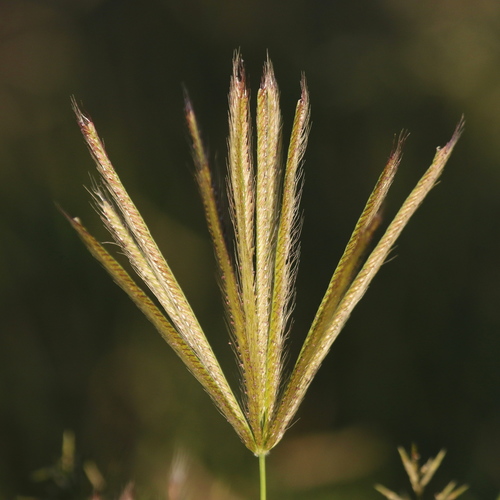
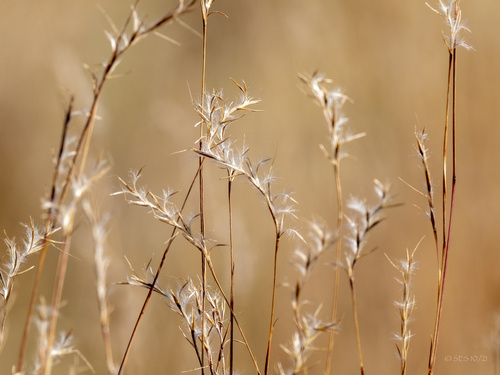
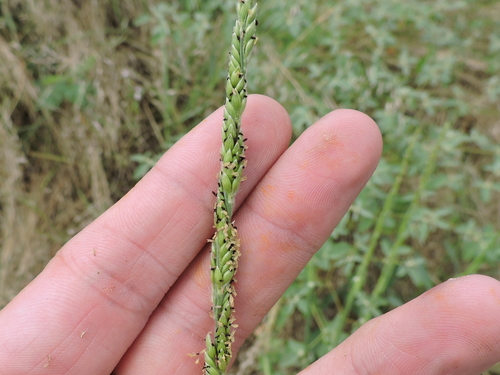
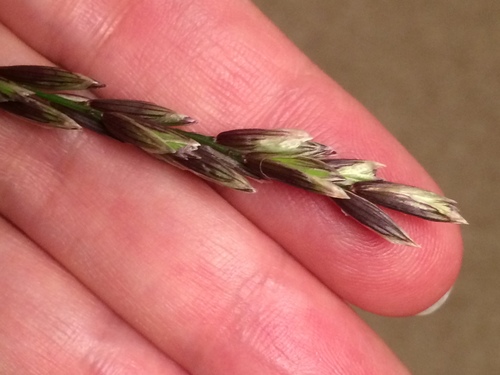
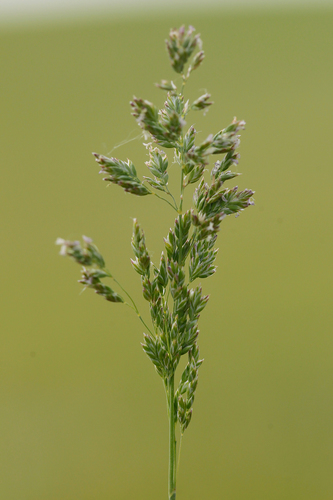
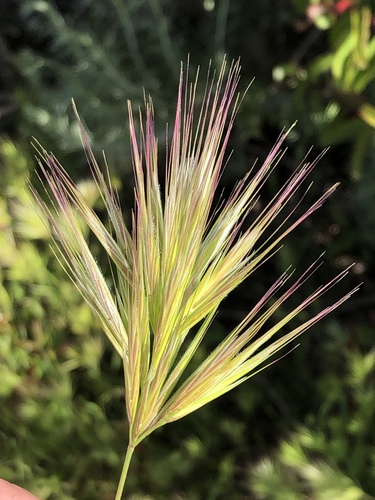
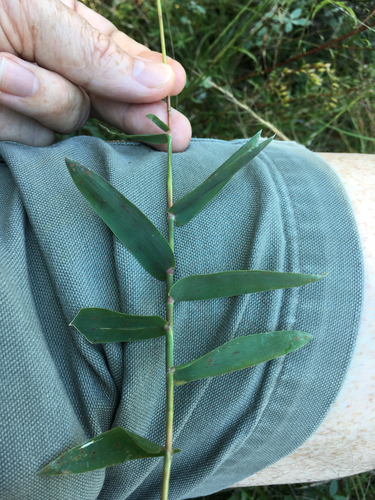
Gymnopogon brevifolius Trin. is a tufted, rhizomatous perennial grass. It has glabrous, branching culms that grow 30–60 cm tall. Its leaves grow along the stems; leaf blades reach up to 9 cm long, are glabrous on both surfaces, and have slightly rough margins. Leaf bases are cordate, and leaf sheaths are glabrous but often have hairs near the apex. Ligules are membranous, ciliolate, and less than 0.4 mm long, while collars are usually pilose. Inflorescences are racemose spikes, with spreading, flexuous, angled, scaberulous branches. Spikelets each hold one flower, are appressed in two rows along one side of the rachis, and measure 4.5–6.5 mm in length. Pedicels are angled, rough, and reach up to 1.5 mm long or are entirely absent. Glumes are 3.5–6.5 mm long, 1-nerved, and have scarious margins. Fertile lemmas are usually glabrous, 3.5–4 mm long, and typically awned, with awns measuring 5–10 mm; sterile lemmas may also be present. Paleas are 3.5–4 mm long and 2-nerved. The callus is usually bearded, and the rachilla may be prolonged or end in a sterile floret. Grains are reddish, linear-ellipsoid, and approximately 2.5–2.6 mm long. This species ranges from southern New Jersey south to South Florida, and west to Louisiana, Arkansas, and East Texas. It grows in pine savannas, woodlands, prairies, sandhills, and calcareous glades, most often in dry sandy or clay hardpan soils. Ecologically, Gymnopogon brevifolius has poor forage value for livestock, but it is eaten by white-tailed deer, and is counted among the main grasses consumed by this species. It is sensitive to soil disturbance from agriculture, and is a possible indicator of native ground cover in the upper panhandle savannas of Florida. It flowers between July and December.