About Gymnomystax mexicanus (Linnaeus, 1766)
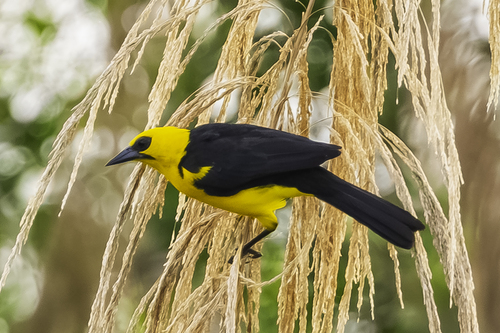
This species, commonly known as the oriole blackbird with the scientific name Gymnomystax mexicanus (Linnaeus, 1766), reaches a length of nearly 30 cm (12 in). Males and females look similar. The head, neck, shoulders and underparts are bright yellow, while the back, wings, rump and tail are black; the only exception is a yellow strip on the lower wing-coverts. The brown eye is surrounded by a black eye ring, and the large bill and feet are blackish. Its voice is made up of multiple loud, scratchy calls, produced when the bird perches on elevated spots or is in flight. One of its calls is a screech that sounds like a rusty hinge. This icterid species lives in northern South America, with a range that covers French Guiana, Guyana, Suriname, Venezuela, Colombia, Ecuador, Peru, and northern Brazil. Its usual habitat consists of grassy areas with isolated trees near rivers, marshes, river islands, and gallery forest. The oriole blackbird is most often encountered in pairs or small groups, and does not form mixed-species flocks. It perches in noticeable, prominent spots on small trees or the tops of bushes, and forages mostly on the ground, especially in muddy areas close to water. It feeds on invertebrates including earthworms, caterpillars and winged insects, alongside frogs and fruit. It will sometimes tear open ripening maize cobs to eat the seeds inside. Breeding occurs in May and June. The nest is cup-shaped, around 17 cm (7 in) in diameter, woven loosely from dry grass and weed stems, and lined with rootlets. The eggs are pale blue, marked with black, brown and lilac blotches and spots. The shiny cowbird, a brood parasite, will sometimes lay its own egg in an oriole blackbird nest. The incubation period lasts around 18 days, and only the female bird incubates the eggs. Both parents take part in feeding the chicks, bringing whole small invertebrates and frogs to the nest in their beaks instead of regurgitating the food.