About Gymnocarpium robertianum (Hoffm.) Newman
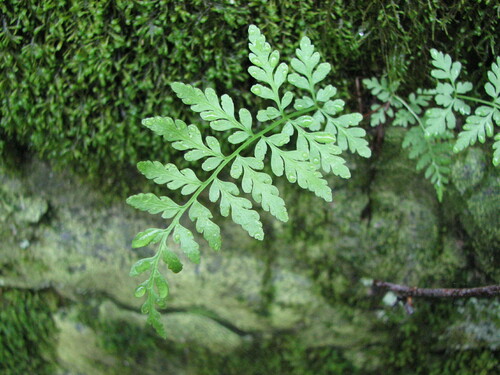
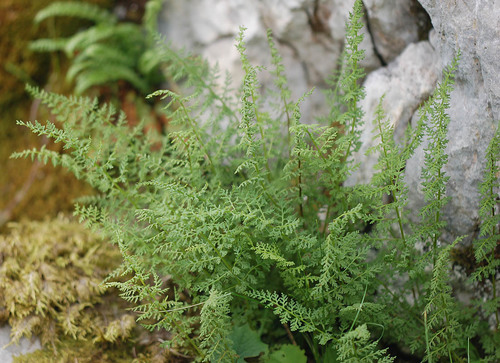
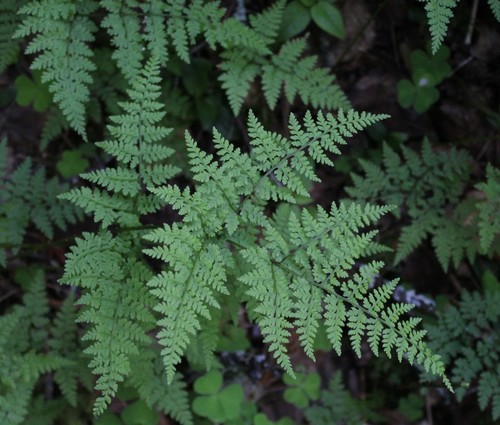
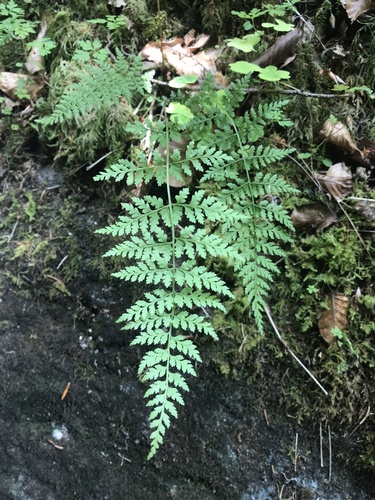
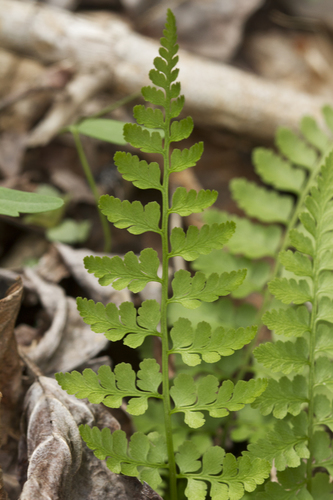
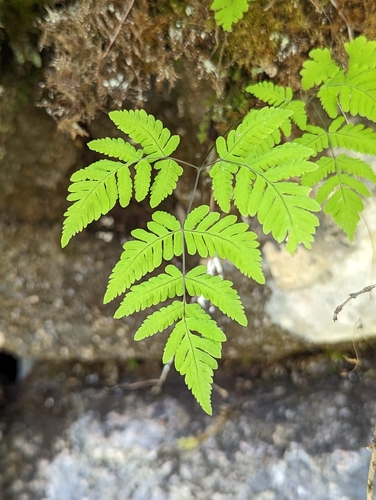
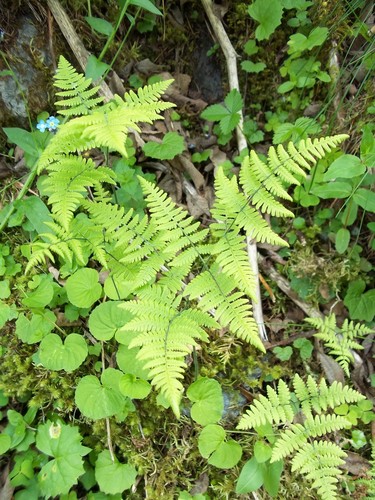
Gymnocarpium robertianum (Hoffm.) Newman produces small fronds that are 10–50 cm long, shaped deltate, and divided into two to three pinnae. Its fronds grow from creeping rhizomes and have a long, delicate rachis. Round clusters of sori form on the underside of the frond blade, and no indusium is present. This species can be distinguished from its close relative G. dryopteris by its densely glandular rachis, combined with a more sparsely glandular blade underside. Gymnocarpium robertianum is believed to hybridize with G. appalachianum to produce the hybrid Gymnocarpium × heterosporum W. H. Wagner. This hybrid was previously only known from Pennsylvania, where it has now been eradicated. The hybrid between G. robertianum and G. dryopteris is named Gymnocarpium × achriosporum Sarvela, and this taxon is found in Sweden and Quebec. Gymnocarpium robertianum is a circumboreal species, with established populations across Europe, North America, and the Caucasus Mountains. It is a protected species in Illinois, Michigan, and is also protected under the Flora Protection Order in Ireland. As a calcicole, this species is restricted to areas with abundant alkaline conditions. In the British Isles, its preferred habitat is grykes on limestone pavement. In Michigan, the species occurs most frequently in Thuja occidentalis swamps.