About Gymnocarpium dryopteris (L.) Newman
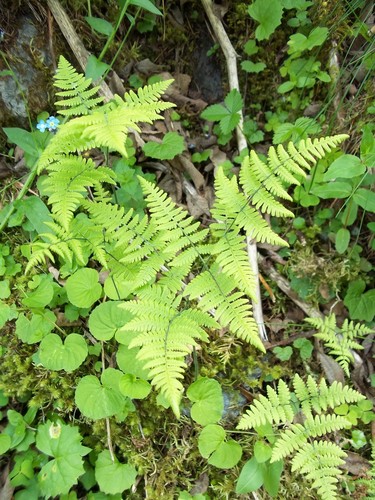
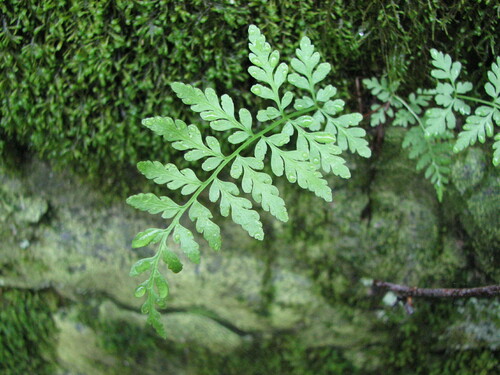
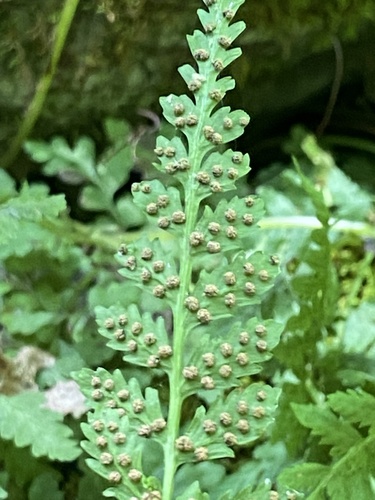
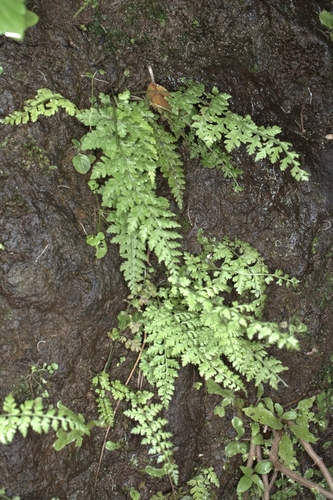
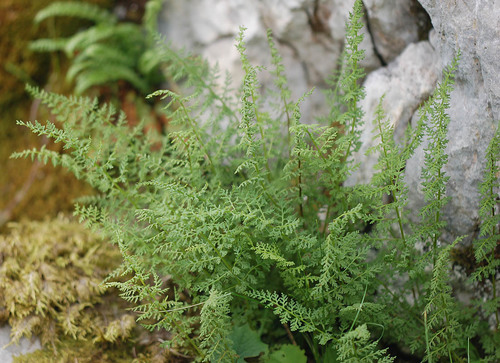
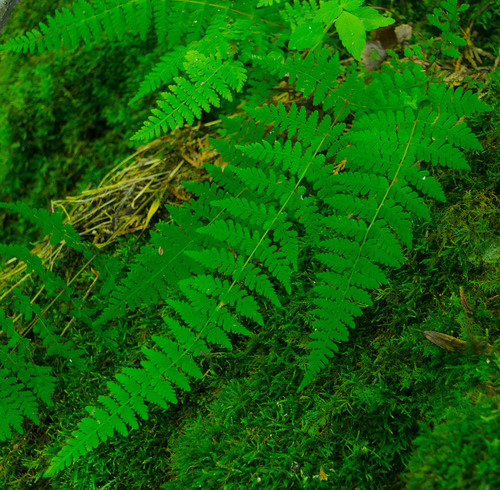
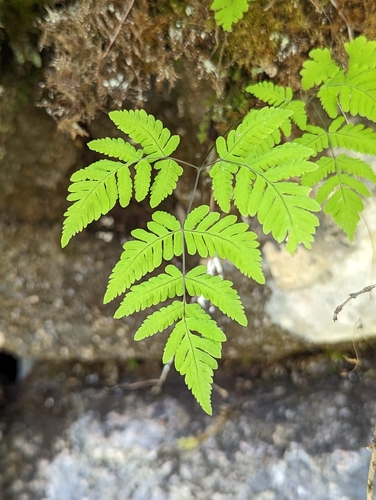
Gymnocarpium dryopteris produces small, delicate fronds that grow up to 40 cm (16 inches) long, with ternately-compound pinnae. Fronds grow singly; each petiole arises from one node on a creeping rhizome. Naked sori are located on the underside of mature pinnae, which matches the meaning of the Latin generic name Gymnocarpium: "with naked fruit". Despite its common name oak fern, this forest understory plant does not grow in association with Quercus (oak). It naturally grows in coniferous woodlands, on shale talus slopes, and most commonly in moist, shady forests with wet soil and humid conditions. It is often found in drainage areas, ditches, and north-facing slopes, and thrives in well-drained soils with a pH of 4.5 to 6.4. Its growing site soil texture can range from silty clay-loams to sandy gravel. This fern grows at elevations of 1,700–4,500 ft (520–1,370 m) on moderately steep slopes facing north, east, and west. Because it is extremely sensitive to ecological changes, northern oak fern serves as an important moisture indicator species. In cultivation in the UK, this species and its cultivar "Plumosum" have earned the Royal Horticultural Society's Award of Garden Merit. Like most ferns, oak fern follows an alternation of generations life cycle. A diploid sporophyte generation, which produces spores, is followed by a haploid gametophyte generation, which produces gametes. Sporangia are grouped into clusters called sori on the underside of the leaf. Each sporangium produces multiple sporocytes, and each sporocyte divides twice to form four non-sexual spores. After spores germinate, they develop into a prothallus that grows archegonia (egg-producing structures) and antheridia (sperm-producing structures). When water is present, spermatozoids travel from the antheridia to archegonia, and fertilization occurs when a sperm reaches an egg. An embryo then grows out of the gametophyte to develop into a new sporophyte.