About Gryllus bimaculatus De Geer, 1773
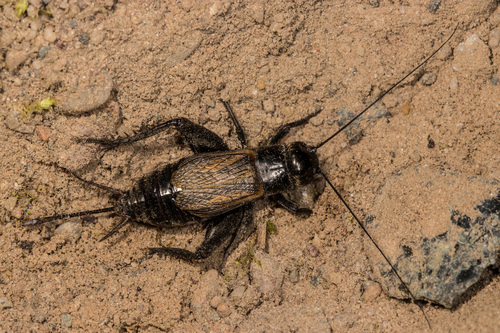
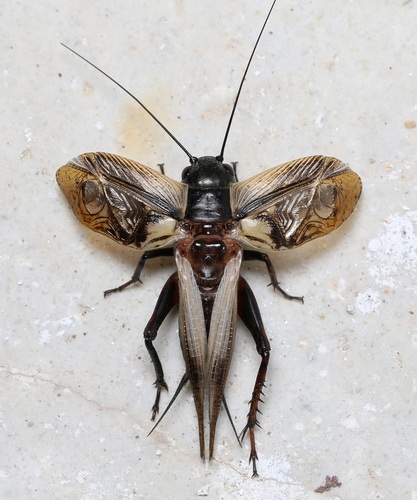
Gryllus bimaculatus De Geer, 1773 is a species of cricket belonging to the subfamily Gryllinae. It is most commonly known as the two-spotted cricket, and has also been called the African or Mediterranean field cricket. Its recorded distribution covers much of Asia, including China and Indochina, extending to Borneo, in addition to its common African and Mediterranean ranges. This species can be distinguished from other species in the Gryllus genus by two dot-like markings on the base of its wings. It is a popular food source for insectivorous animals kept as pets or housed in zoos, such as spiders and reptiles. It is easy to raise in captivity, and does not need prolonged cold exposure to complete its full life cycle. For reproduction, females have a tubular rear organ called an ovipositor, which they use to lay eggs into the ground. They deposit their eggs into humid soil or sand, and hatchlings emerge from the eggs approximately two weeks after laying. Gryllus bimaculatus is widely used as feed for pet and zoo animals, particularly as live feed. In some countries including China, Vietnam, and Thailand, this species is either farmed or wild-caught to be used in cricket fighting. In Vietnam, male individuals of this species have two common common names: "dế than" (coal cricket) and "dế lửa" (fire cricket), which correspond to two common male color morphs of the species. Most Vietnamese cricket handlers, who are mainly children, believe that black-colored male Gryllus bimaculatus are more resilient during fights, while orange-colored male fire crickets are physically stronger but surrender easily. There is also a local belief that crickets that live in abandoned snake pits absorb the snake's venom and become more formidable fighters.