About Gryllotalpa orientalis Burmeister, 1838
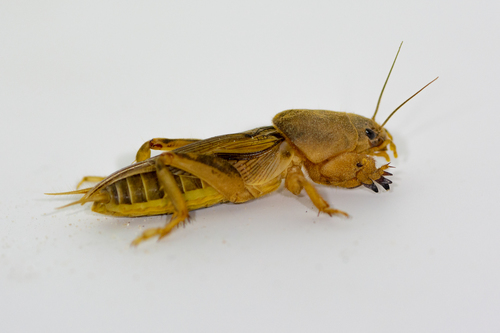
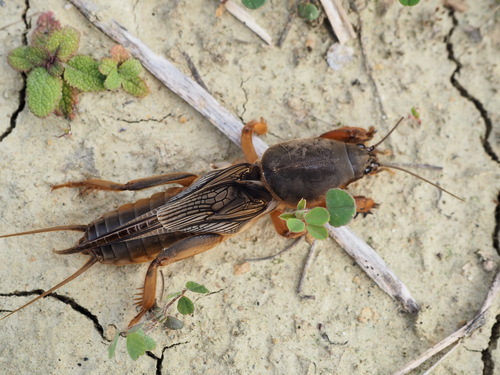
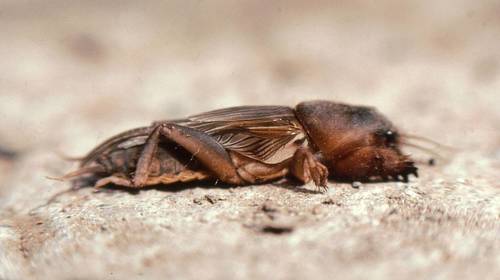
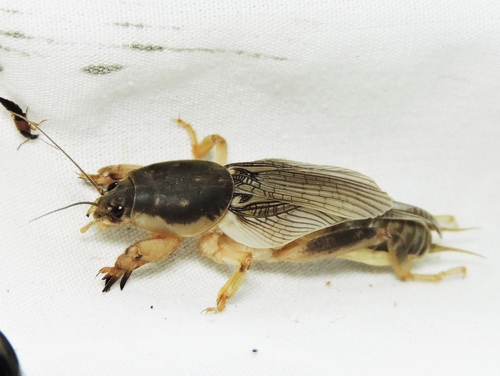
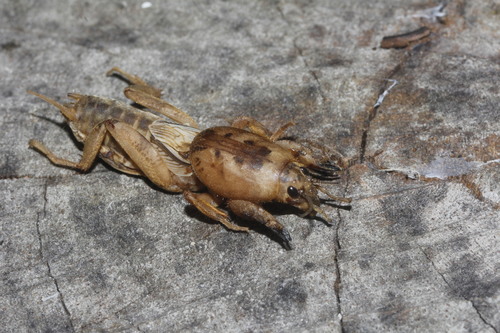
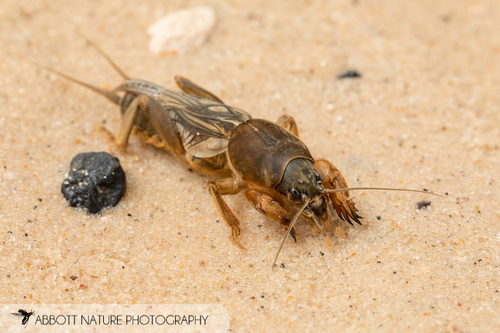
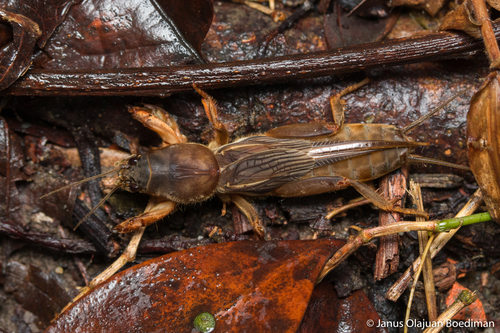
Gryllotalpa orientalis Burmeister, 1839, commonly called the oriental mole cricket, has a plump, yellowish-brown body that is paler on the underside, reaching approximately 20 mm in length. It has short filiform antennae, specialized fore legs adapted for digging, and a large oblong pronotum. Its hind wings project slightly out from underneath the fore wings. After mating underground, the female constructs a nesting chamber deep in the soil and lays around 200 oval eggs, which hatch after 10 days. Nymphs stay in the nest for their first 2 to 3 weeks, guarded by the mother. Newly hatched nymphs have blueish-white prothoraxes and legs. Later nymph instars are grayish-black with white markings, and the final nymphal stage resembles the adult with short wing pads. The entire lifecycle of this species takes 1 to 3 years, varying with climatic conditions. Adults and late-instar nymphs overwinter underground at a depth of around 1 meter. This species is distributed across Russia, other regions of the former USSR, China, Japan, Taiwan, India, Indonesia, the Philippines, and Hawaii, where it is thought to have been introduced from Asia before 1896. The oriental mole cricket is a subterranean species that lives in damp soil, where it digs an interconnected network of passages. Its natural habitats include damp, nutrient-rich soils such as floodplains, stream and pond banks, as well as agricultural land and gardens. Its burrows include both vertical and horizontal passages, can have complex structures, and different sections of the burrow serve different purposes. It feeds on plant roots, tubers, and rhizomes, as well as insects, earthworms, and other invertebrates. It travels to the surface and flies during the evening and night, and is attracted to artificial light sources. A large emergence of overwintered individuals typically occurs when temperatures rise to between 12 and 15°C. The species' natural enemies include birds, insectivorous mammals, ants that feed on its eggs, beetles that eat its larvae, nematodes, and mites. Fungal diseases can cause severe mortality during winters that have sudden temperature increases and thaws.