About Grylloprociphilus imbricator (Fitch, 1851)
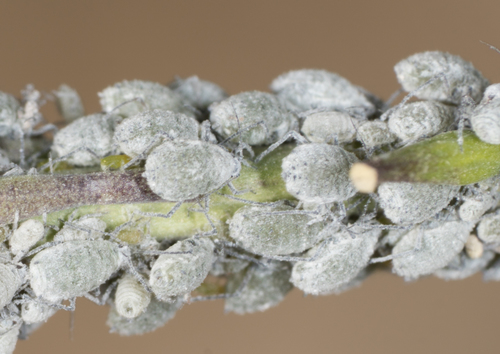
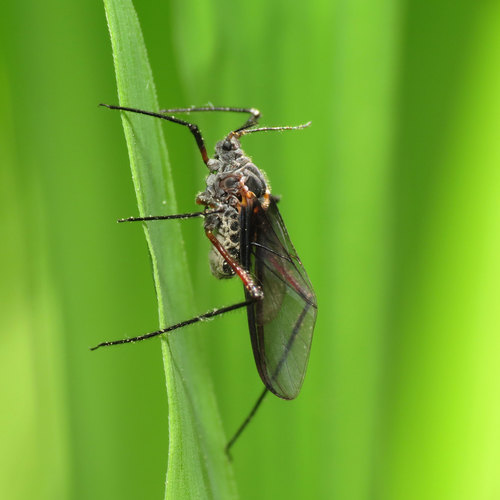
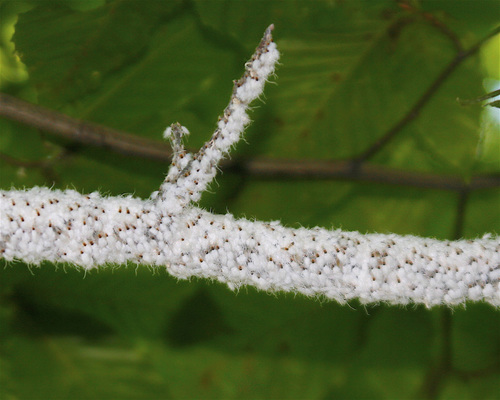
The beech blight aphid, scientifically named Grylloprociphilus imbricator, is a small Hemiptera insect that feeds primarily on the sap of American beech trees. These aphids form dense colonies on small branches and the undersides of leaves. Depending on their geographic location, the roots of the bald cypress (Taxodium distichum) act as a secondary host. Some aphids alternate between the two hosts, while others remain on Taxodium distichum year-round. These aphids are light bluish, and their bodies are covered in long, white waxy filaments that give them a woolly appearance. They first become noticeable in July, and become more visible as their population grows. Very large numbers can be found on individual branches, and sometimes spread onto leaves. Infested trees may look like their branches and twigs are covered in snow. When disturbed, this aphid displays a defensive behavior: it raises the posterior end of its body and sways from side to side. When many aphids do this movement at the same time, the species has earned the common nickname "Boogie-Woogie Aphid". Deposits of the sooty mold fungus Scorias spongiosa build up below aphid colonies, growing on the large amounts of honeydew that the aphids exude. Multiple ant species are attracted to the honeydew; they glean it below aphid feeding areas on beech trees, and tend aphids at cypress tree sites. These aphids usually do not cause much damage to the overall health of a tree, though dieback occasionally occurs on very heavily infested branches. When infestations are heavy, twigs may die, but overall damage to the tree is usually minor. Aphids can be blasted off trees with a jet of water, or controlled with any insecticides labeled for use against aphids. A wetting agent should be added to help the treatment penetrate the waxy covering on the aphids' bodies. Horticultural oil sprays and insecticidal soap have also been used successfully to control this species. Several parasites are known to attack this aphid, and it is thought that these parasites will eventually effectively reduce aphid population numbers.