About Gromphadorhina portentosa (Schaum, 1853)
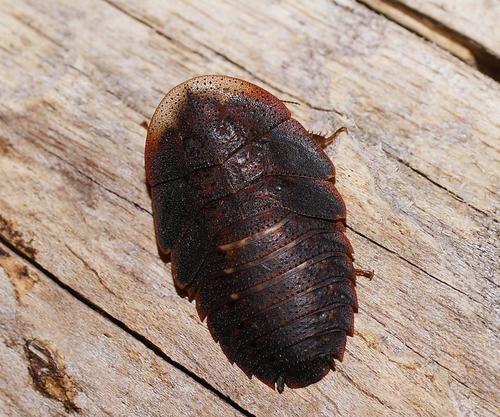
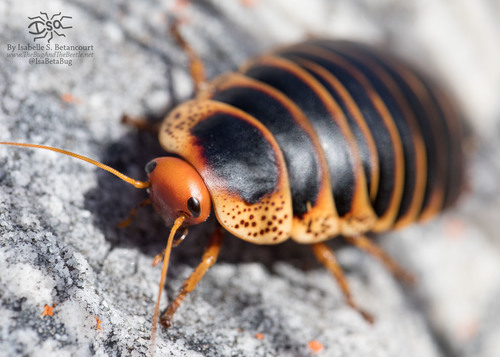
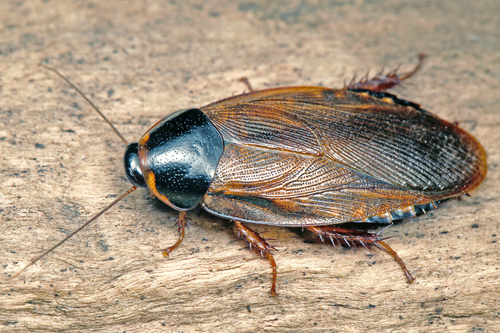
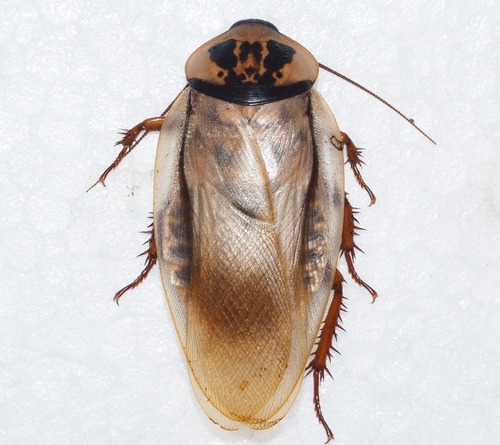
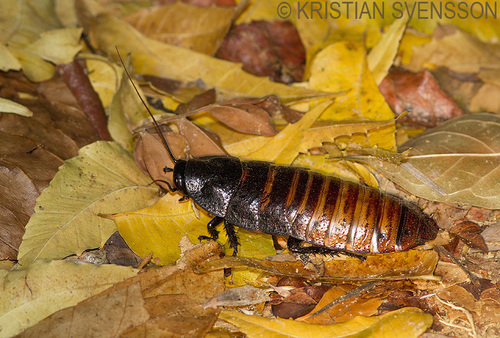
The Madagascar hissing cockroach, with the scientific name Gromphadorhina portentosa, is also commonly called the hissing cockroach, Malagasy hissing cockroach, or simply the hisser. It is one of the largest cockroach species, reaching 5 to 7.5 centimetres (2 to 3 inches) when mature. This species is native to the island of Madagascar, located off the African mainland, where it is commonly found in rotting logs. There are around 20 known species of large hissing roaches from Madagascar; many of these species are kept as pets, and pet dealers often confuse them with one another. G. portentosa is particularly commonly confused with G. oblongonota and G. picea. Unlike most cockroaches, Gromphadorhina portentosa is wingless. It produces its characteristic 'hissing' sound by expelling air through its body, and this hiss is its primary defense to frighten potential predators, since it cannot fly and is easily captured. It is an excellent climber, and can even climb smooth glass. Males can be told apart from females by their thicker, hairier antennae and the very prominent bumps on the pronotum. Females carry the ootheca internally, and only release the young nymphs after the offspring have already emerged inside their body; this reproductive method is called ovoviviparity. Like some other roaches that live in wood, parent Madagascar hissing cockroaches and their offspring commonly stay in close physical contact for long periods. In captivity, this species can live up to 5 years. It feeds primarily on vegetable material.