About Grallaria nuchalis P.L.Sclater, 1860
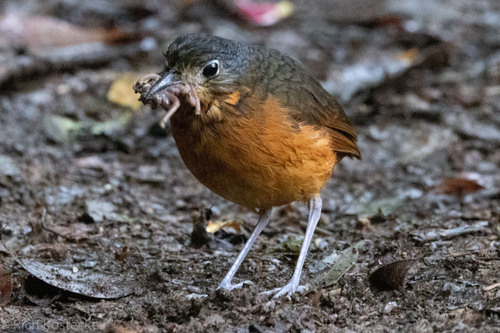
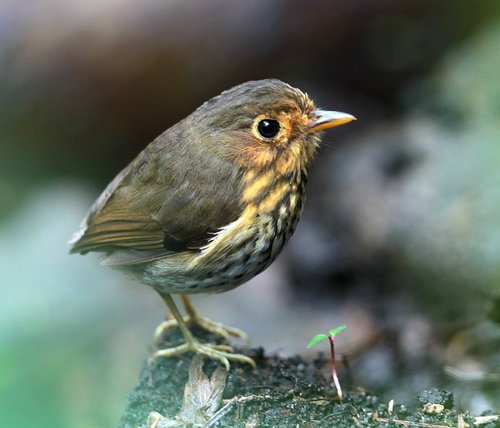
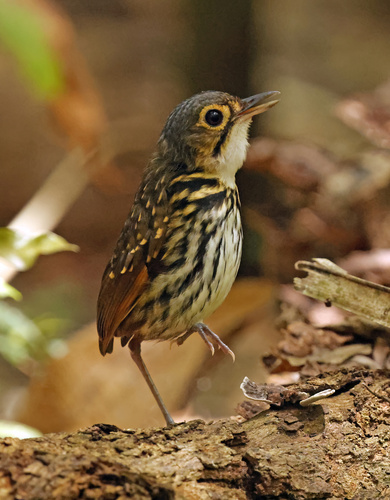
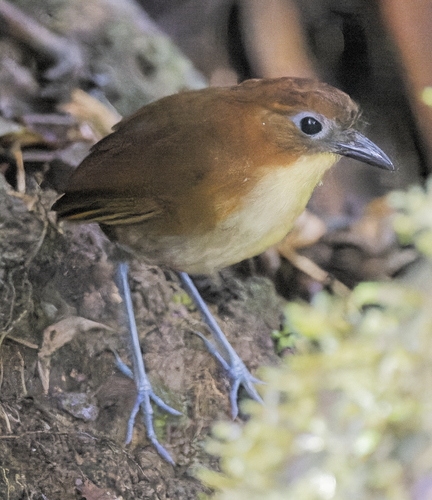
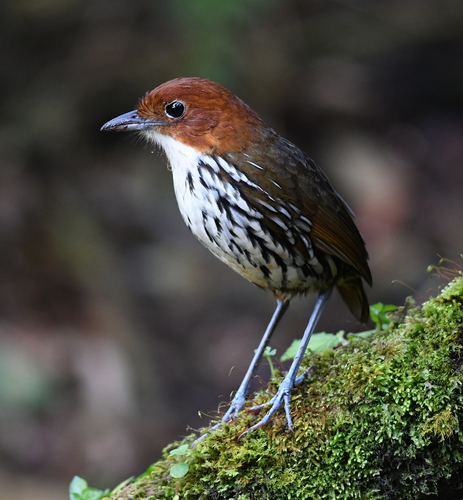
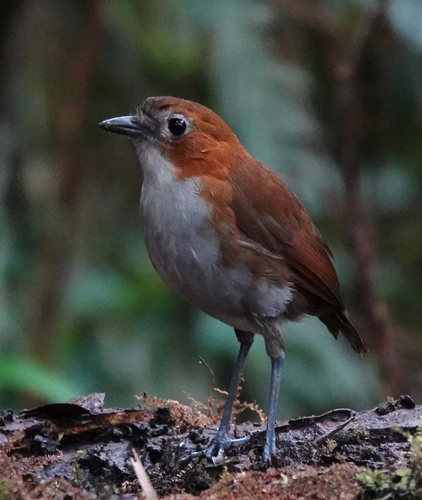
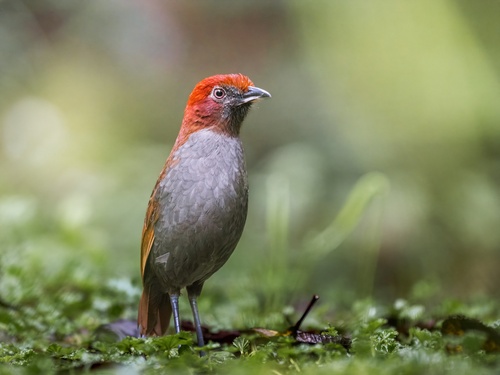
Grallaria antpittas, the group that includes Grallaria nuchalis, form a wonderful group of plump, round antbirds that often keep their feathers fluffed up. They have stout bills and very short tails. The chestnut-naped antpitta, Grallaria nuchalis, measures 19.5 to 21 cm (7.7 to 8.3 in) long and weighs 104 to 122 g (3.7 to 4.3 oz). Males and females have no differences in plumage. Adults of the nominate subspecies have a dark chestnut crown, with a rufous-chestnut hindcrown, nape, and face. They have gray lores and a patch of bare white skin behind the eye. Their upperparts and tail are brown, and their wings are mostly brown with tawny-brown primaries. Their underparts are ashy gray, which is darkest on the throat. Subspecies G. n. ruficeps has brighter rufous-chestnut coloring on its crown, nape, and face, and lighter gray underparts, than the nominate subspecies. G. n. obsoleta has a brown crown, blackish lores, a more chestnut-colored face, olivaceous brown upperparts, and blackish gray underparts. All subspecies have a gray iris, a black bill, and pale blue-gray legs and feet. The chestnut-naped antpitta has a disjunct distribution. The nominate subspecies occurs on the east slope of the Andes, at minimum from Ecuador's Pichincha Province south into the Department of Piura in northern Peru; it may also range further north as far as Nariño Department in southwestern Colombia. Subspecies G. n. ruficeps is found on the western slope of Colombia's Eastern Andes in Cundinamarca Department, in Colombia's Central Andes between Antioquia and Cauca departments, and possibly in the Western Andes of Antioquia Department. G. n. obsoleta occurs on the west slope of the Andes in Imbabura and Pichincha provinces in northern Ecuador. The chestnut-naped antpitta lives in temperate to humid montane forest, where it is almost entirely found in and near dense bamboo stands. It also lives in the undergrowth of adjacent forest that does not contain bamboo. In Colombia and Ecuador, it occurs at elevations between 2,000 and 3,000 m (6,600 and 9,800 ft), and between 2,200 and 3,000 m (7,200 and 9,800 ft) in Peru.