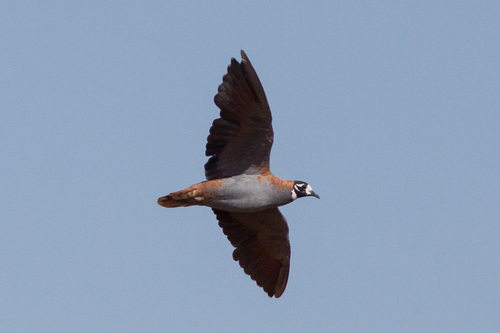
About Goura cristata (Pallas, 1764)
The western crowned pigeon, also called the common crowned pigeon or blue crowned pigeon, has the scientific name Goura cristata. It is a large blue-grey pigeon, with lacy blue crests on its head and dark blue mask-like feathers around its eyes. Males and females look almost identical, though males are typically larger than females. On average, this species measures 70 cm (28 in) long and weighs 2.1 kg (4.6 lbs). Along with its close, very similar relatives — the Victoria crowned pigeon, Sclater's crowned pigeon, and Scheepmaker's crowned pigeon — it is one of the largest members of the pigeon family. The western crowned pigeon is endemic to the lowland rainforests of northwestern New Guinea, while other crowned pigeon species live in different regions of the island. Its diet is made up primarily of fruits and seeds. The species is hunted for food and its plumes, and it is only common in remote areas. Because of ongoing habitat loss, limited geographic range, and overhunting in some regions, the western crowned pigeon is classified as Vulnerable on the IUCN Red List of Threatened Species, and it is listed in Appendix II of CITES. It was first described by German naturalist Peter Simon Pallas in 1764, who originally gave it the binomial name Columba cristata. A 2018 molecular phylogenetic study found that the western crowned pigeon is most closely related to Sclater's crowned pigeon (Goura sclaterii).