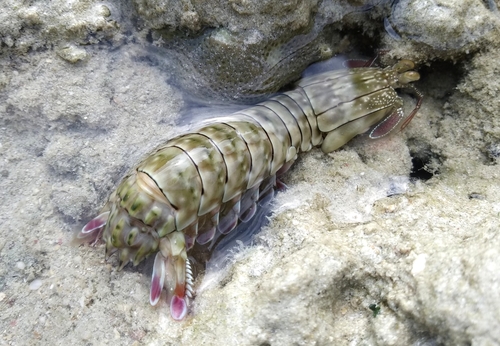
About Gonodactylus chiragra (Fabricius, 1781)
Gonodactylus chiragra (Fabricius, 1781) typically grows to a maximum length of 105 millimetres and is sexually dimorphic. Males range in color from brown to dark green, while females range from grey-green to white. This species is widely distributed in the western Indo-Pacific. It occurs in shallow water in the upper intertidal zone around boulders and coral heads where prey is available. G. chiragra are burrowers, but usually do not construct their own shelters. Instead, they occupy rocky cavities that are either natural or created by other animals such as mollusks. They are able to erode the burrow material to reshape it so that it perfectly fits their body shape. Burrows serve many purposes for this species, including protection, acting as lookouts to find prey, a space to consume prey, a site for mating, and a safe place to keep eggs. G. chiragra are active during the day and often close off the entrance to their shelter at night using bits of sand and rocks.

