About Goniobranchus tumuliferus (Collingwood, 1881)
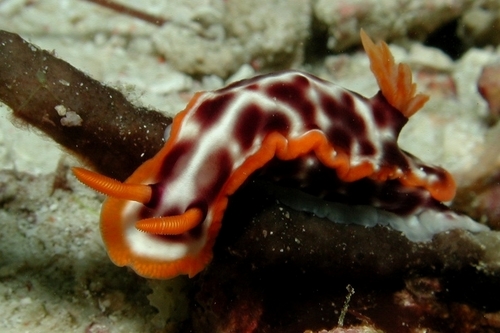
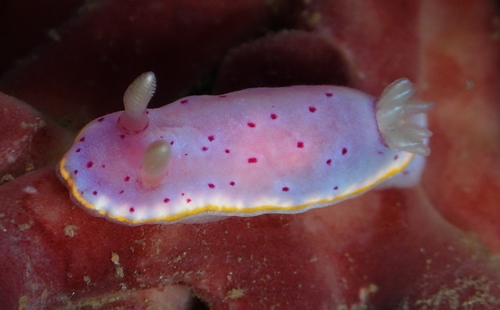
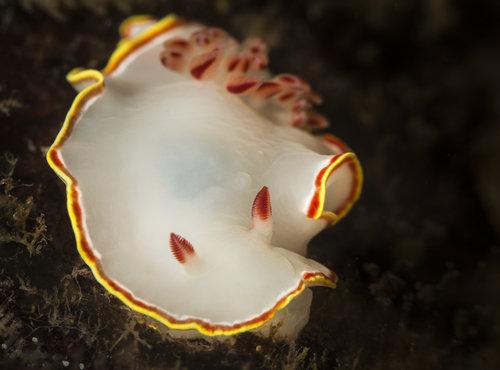
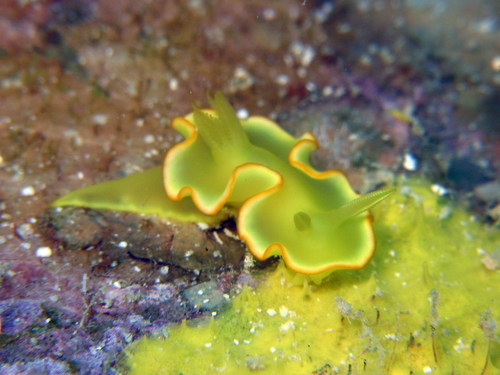
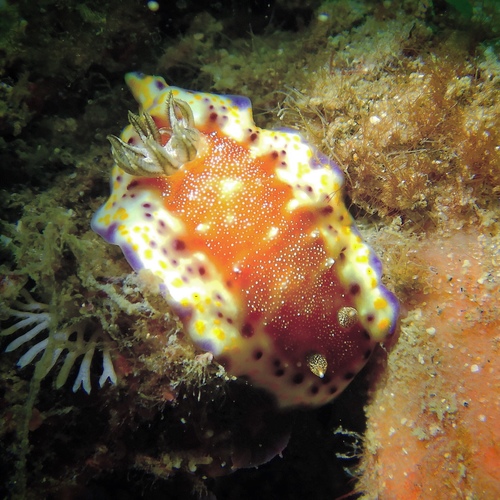
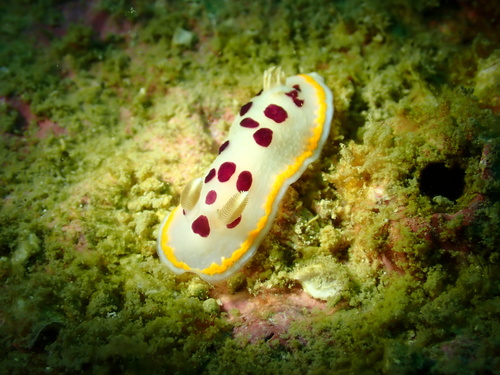
Goniobranchus tumuliferus, originally described as Chromodoris tumuliferus by Collingwood in 1881, is a chromodorid nudibranch. It has a translucent white mantle marked with large carmine-red spots. A yellow submarginal line runs along the edge of the mantle; this line can be continuous or broken into yellow blotches, and the outermost edge of the mantle is translucent or white. Additional red blotches or an almost continuous red margin may occur within this outer margin. Its wide geographic distribution and highly variable color pattern suggest that it may actually be a species complex. This species was moved from the genus Chromodoris to the genus Goniobranchus based on molecular DNA evidence. It looks very similar to Goniobranchus kitae, but Goniobranchus kitae differs by having small white spots on its gills and rhinophores. This species was first described from specimens collected at Slut Island, Haitan Straits, China. Collingwood also collected additional specimens at Labuan, Borneo. It has also been reported from Thailand, Singapore, Japan, Hong Kong, Indonesia, Fiji, and New Caledonia.