About Gomphurus externus (Hagen, 1858)
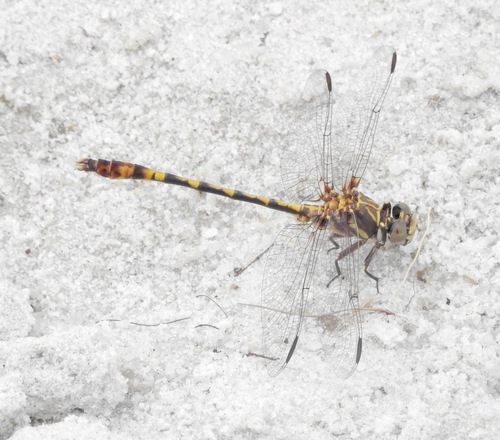
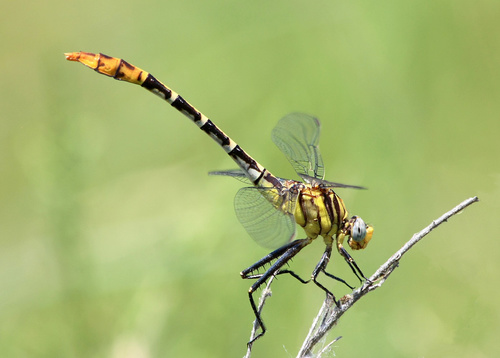
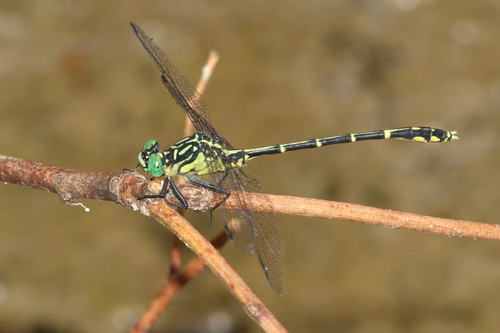
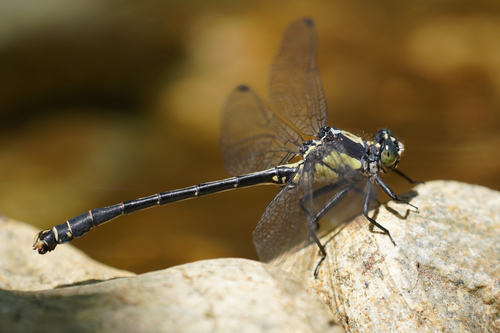
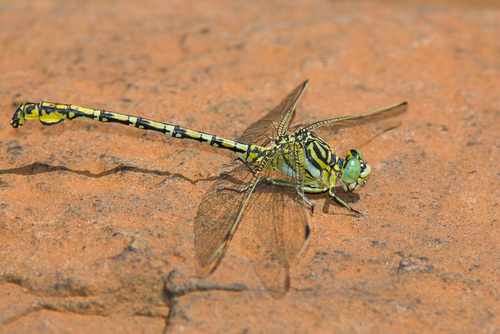
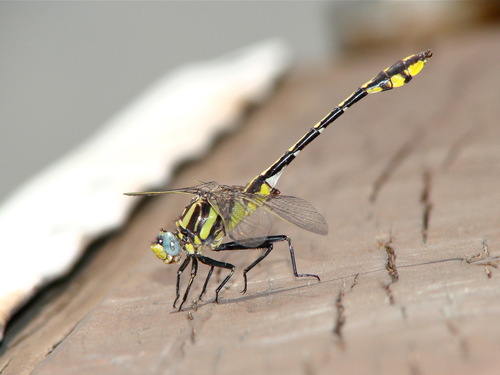
Gomphurus externus, commonly known as the plains clubtail, is a dragonfly species belonging to the family Gomphidae. Its known geographical distribution spans the United States, including Arkansas, Colorado, Iowa, Idaho, Illinois, Indiana, Kansas, Kentucky, Maine, Michigan, Minnesota, Missouri, Montana, Nebraska, North Dakota, New Mexico, Ohio, South Dakota, Texas, the U.S. Virgin Islands, Utah, Wisconsin, Wyoming, and the Canadian province of Manitoba. Plains clubtails prefer habitats of moderately flowing rivers and large streams with muddy bottoms, and they are occasionally found in lakes. Nymphs of this species are very selective about their habitat, and often only occur in specific stretches of a given river or stream. Nymphs burrow into sand or mud, leaving only the upturned tip of their abdomen exposed. This behavior allows them to breathe while buried by pumping water in and out of the abdominal tip. Unlike most dragonfly species, plains clubtail nymphs emerge as adults during the day. Adults generally fly between mid-July and mid-August, though they may have other flight periods at other times. This species cannot tolerate cooler temperatures, and individuals are rarely seen flying on cool or cloudy days. Adults hunt from resting spots on rocks or bare sand. They perch with their abdomen elevated and their wings drooping, until the wing tips just touch the ground. After mating, the female flies alone to lay eggs, with no male attached. She lays eggs by dipping the tip of her abdomen into rivers, lakes, or slow streams while hovering above the water. Laboratory experiments with this species have found that females are capable of laying more than 5000 eggs.