About Gomphosus varius Lacepède, 1801
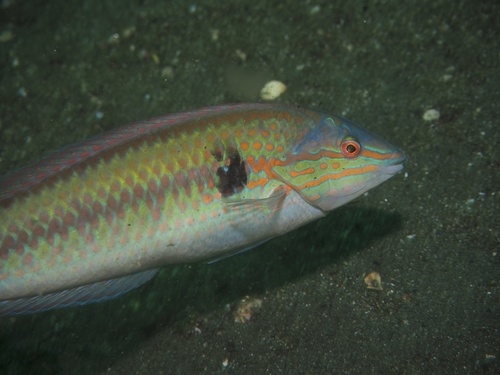
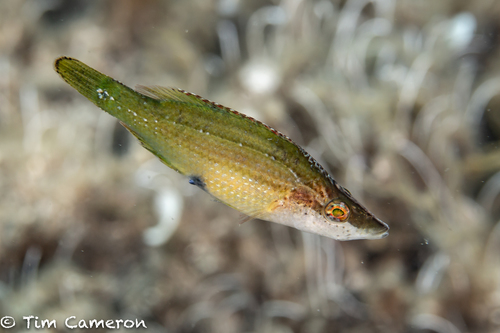
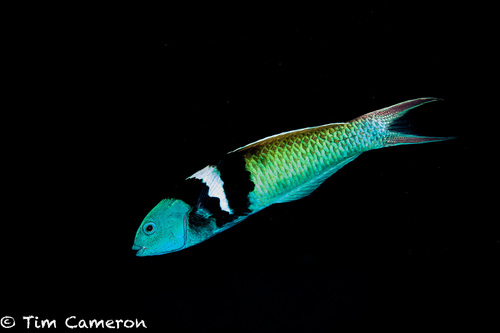
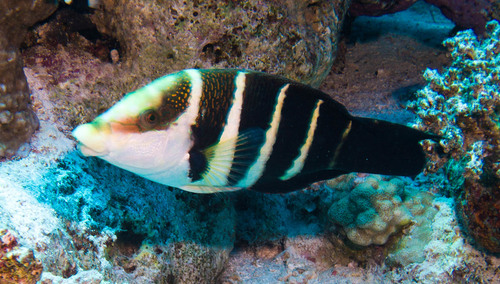
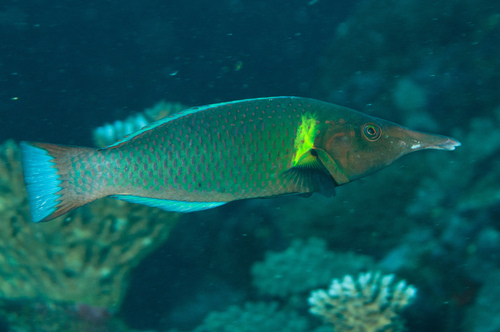
Gomphosus varius, commonly called the bird wrasse, is a medium-sized fish that can reach a standard length of 30 cm (12 in). It has an elongated, laterally compressed body, a truncated tail, and a long snout. Adult individuals are relatively easy to identify by their characteristic long nose and the jerky flapping of their pectoral fins when swimming. Juveniles are harder to recognize, as they have not yet developed the species' signature prominent snout. Gomphosus varius can be mistaken for its close relative Gomphosus caeruleus, but it differs from this species in both its color pattern and geographic range. Like many wrasses, Gomphosus varius is a sequential hermaphrodite. When it changes sex, its body shape, color intensity, and color pattern change significantly. Females are smaller than males and have a duller overall body color. In females, the anterior half or first third of the body is light-colored: the belly and chest are pearly white, the flank scales are grayish with a dark border, the upper half of the snout is red-orange, a thin brown longitudinal line crosses the eye, and the pectoral fins are translucent. Males have a more uniform body color than females, with a dominant greenish shade that varies in intensity between individuals, and also changes with maturity and mating period. A male's head may also be dark bluish, and the shoulder of the pectoral fin has a yellowish tint that is lighter green than the flanks. The bird wrasse lives in tropical and subtropical Indo-Pacific waters, ranging from the eastern Indian Ocean to the Pacific Ocean's oceanic islands, including the Hawaiian archipelago. It most often occurs on external slopes, reefs, and lagoon areas with abundant hard coral.